

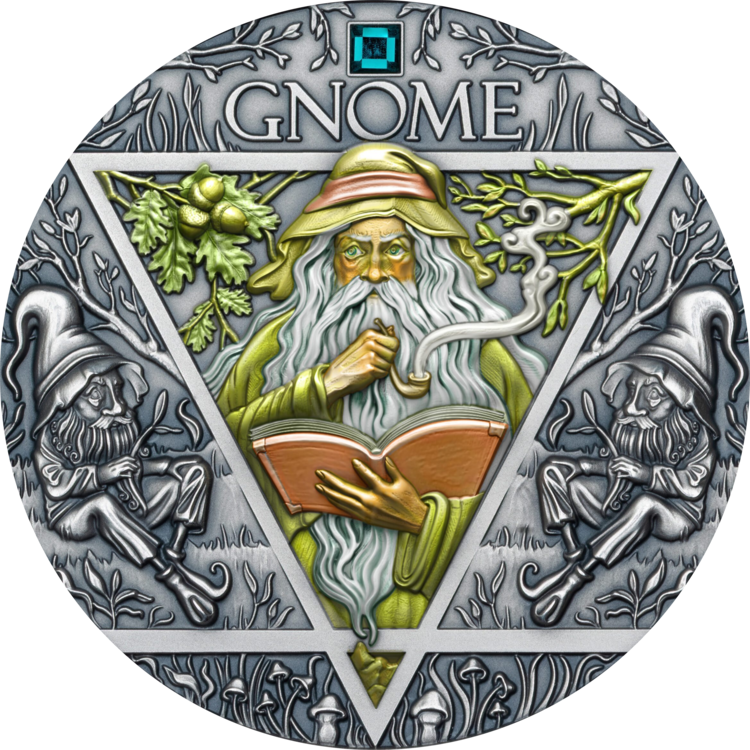
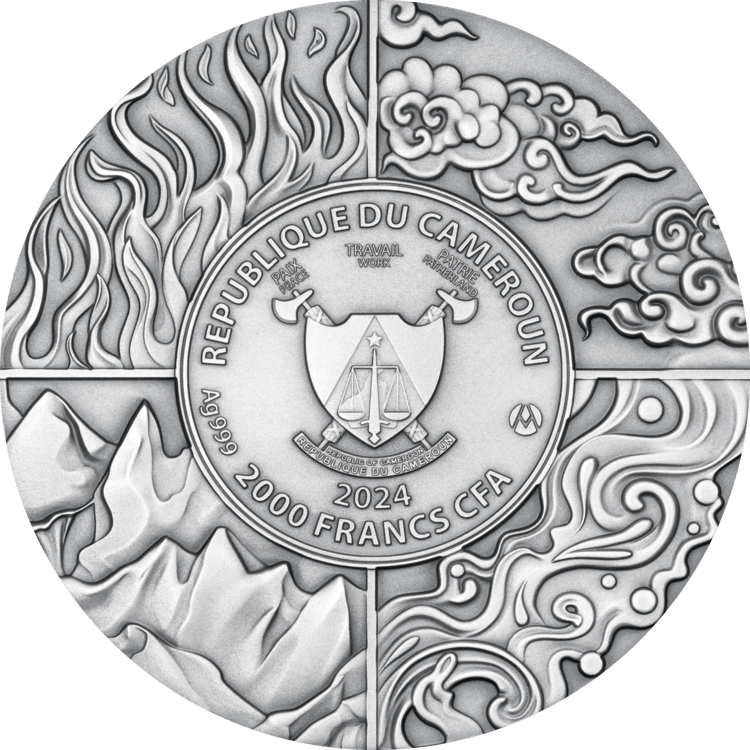
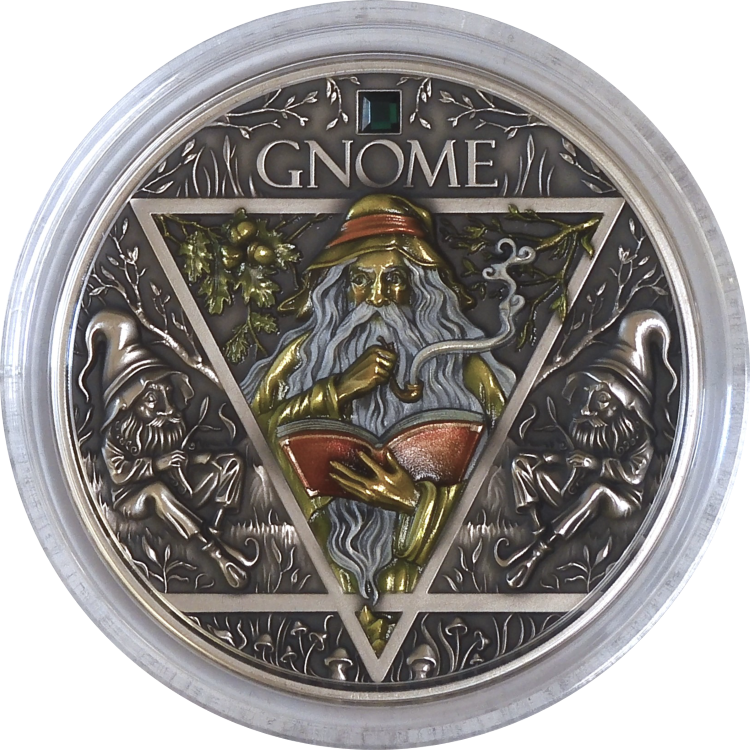
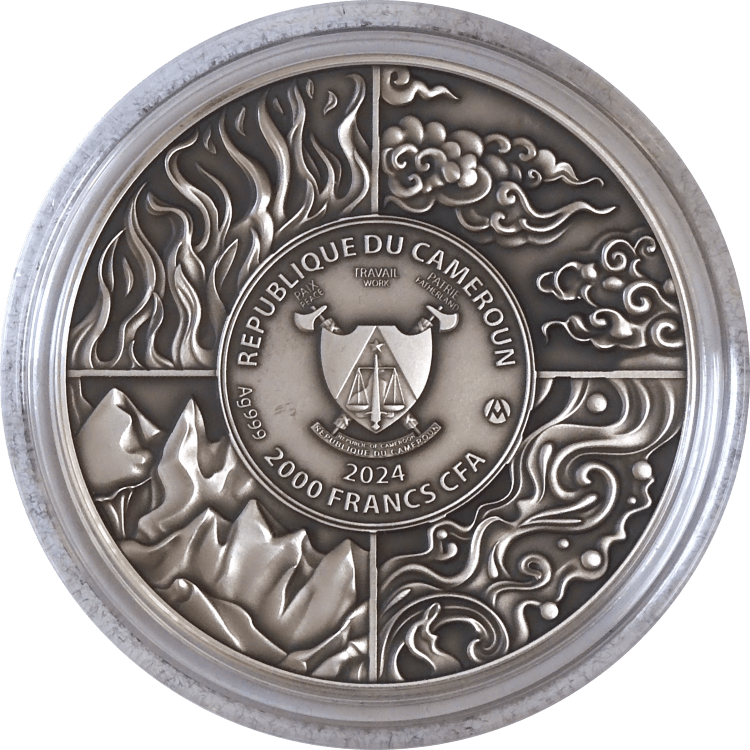
Antique Colorized High Relief Coin
First issue from the series: “The Elementals Series”
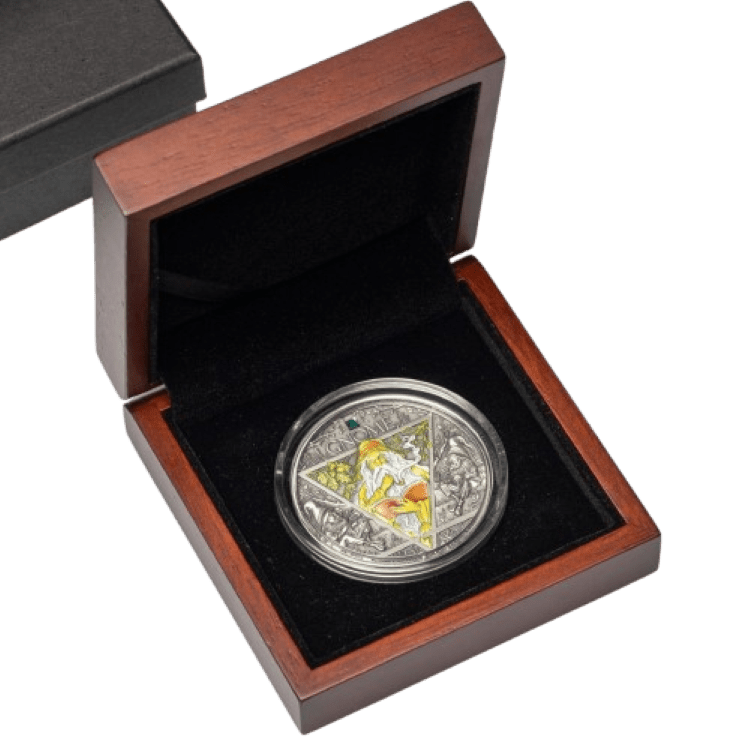
The Essence of Gnomes
Gnomes are deeply connected to the earth and its hidden wonders, embodying a strong link to the physical world and its resources. This is most evident in their association with earthly treasures like minerals, gems, and precious metals. As skilled miners, smiths, and craftsmen, they possess an innate understanding of these materials, shaping them into beautiful and useful objects and acting as protectors of the earth’s hidden wealth.
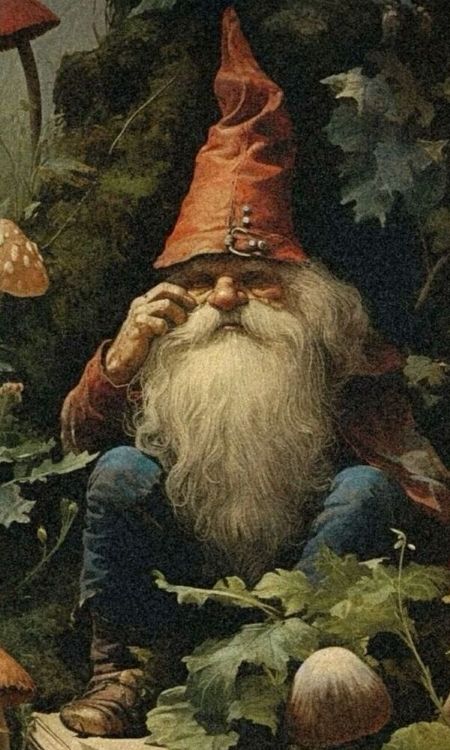 Beyond their craftsmanship, gnomes are revered for their wisdom and knowledge, gained from long lifespans and a deep connection to the earth’s secrets. They are believed to possess a profound understanding of natural processes and hidden lore, making them figures of respect. Their inherent practicality and groundedness further emphasize their role as guardians of these earthly treasures. While generally benevolent, gnomes are also fiercely protective of their domain, driven by a sense of responsibility towards the natural world, and will resolutely defend it against any perceived threat.
Gnomes and Their Symbolic Associations
Gnomes’ inherent connection to the earth solidifies their symbolic role as representations of stability and security. The earth itself symbolizes foundation and groundedness, and gnomes, as its inhabitants and guardians, embody this, representing rootedness and a connection to something enduring. This connection provides a sense of reliability and permanence. Their renowned skills in mining and crafting further transform them into powerful symbols of hard work, dedication, and the value of skilled labor. They embody the rewards of persistent effort and the ability to transform raw materials into objects of value, reinforcing the importance of practical skills and the dignity of labor.
The gnomes’ subterranean dwellings also contribute to their symbolism of hidden knowledge and wisdom. Just as valuable resources lie concealed beneath the ground, so too does wisdom and understanding reside within the natural world and within ourselves. As inhabitants of this hidden realm, gnomes symbolize the potential for uncovering these depths and gaining profound insights. This symbolism, combined with their attributes of stability and craftsmanship, explains their enduring popularity in modern fantasy and popular culture, where they frequently appear as skilled craftsmen, gardeners, or guardians of natural places, reinforcing their connection to the earth. Their continued presence in folklore and fantasy literature attests to the enduring power of these symbolic associations.
Gnomes in Art and Literature
Gnomes have firmly planted their pointy-hatted feet in modern art and literature, evolving from simple folklore figures into complex characters with diverse roles. 1 In literature, they’ve moved beyond traditional tales to inhabit fantasy worlds like J.R.R. Tolkien’s Middle-earth, where they are reimagined as the skilled and ancient Dwarves, emphasizing their craftsmanship and connection to the earth. They also appear in more whimsical settings, such as Terry Pratchett’s Discworld, where they are often humorous and quirky. In art, gnomes have experienced a resurgence, sometimes appearing in contemporary works as symbols of nature, environmentalism, or even as ironic commentaries on suburban life, as seen in the popular phenomenon of garden gnomes. Whether they are portrayed as wise guardians of the earth or mischievous garden dwellers, gnomes continue to capture the imagination and offer rich symbolic potential for artists and writers alike.
Antique Colorized High Relief Coin
Second issue from the series: “The Elementals Series”
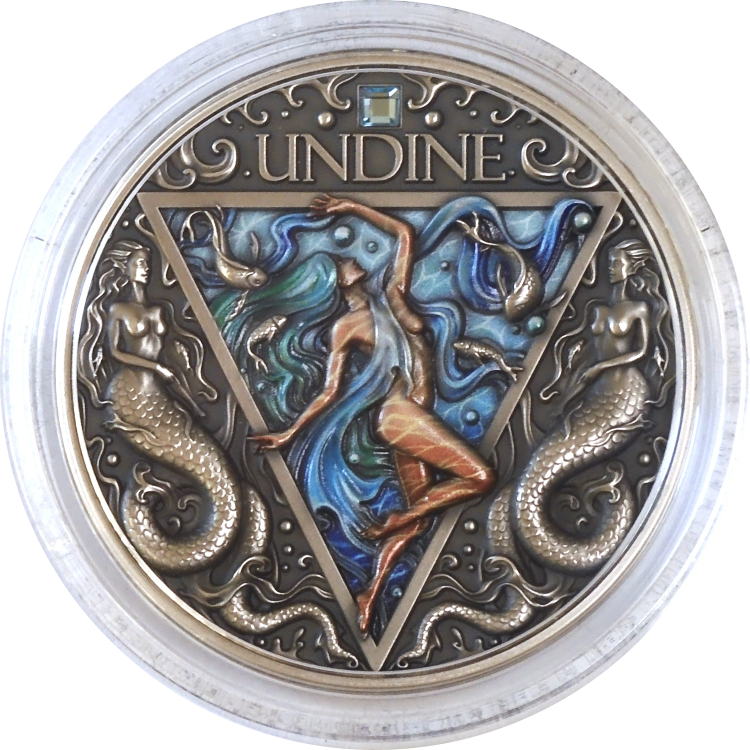
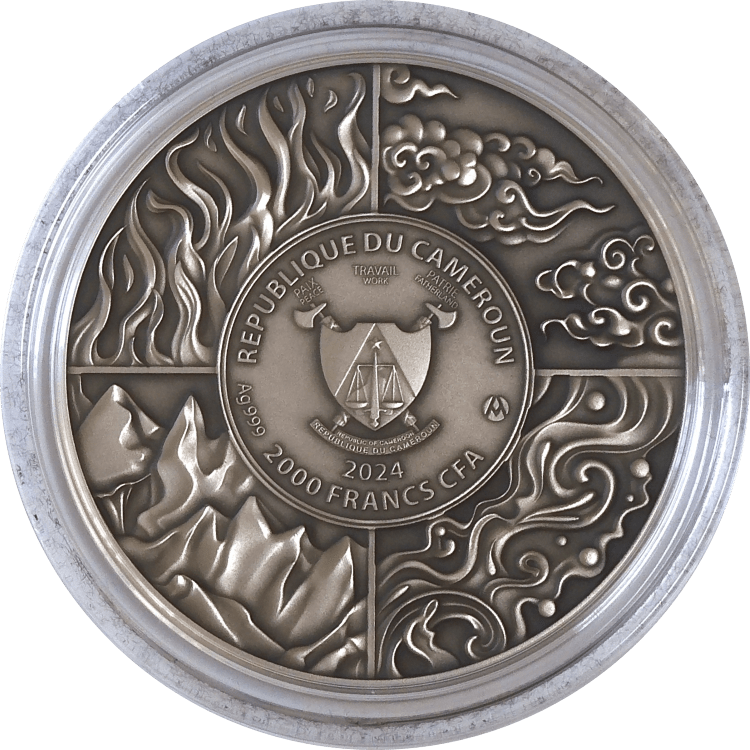
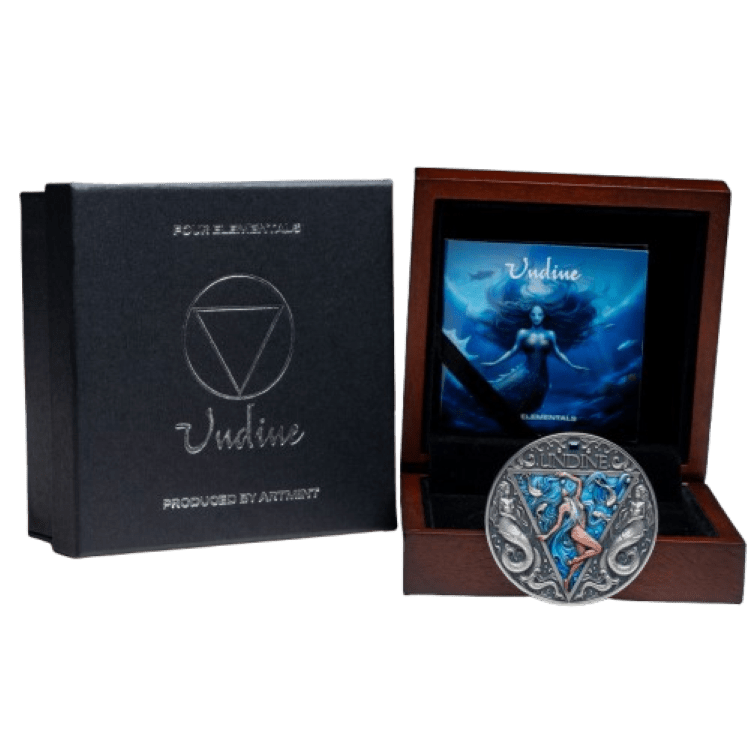
Realms of the Undines
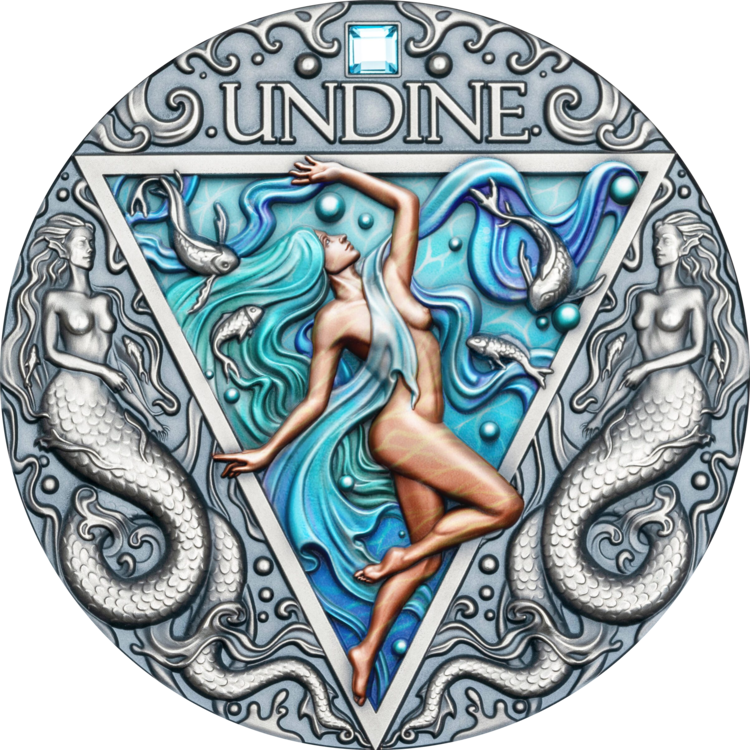
Undines are intrinsically linked to freshwater environments, making their home in the clear waters of rivers, lakes, waterfalls, and ponds. This preference for freshwater distinguishes them from other aquatic beings. They are rarely, if ever, associated with the vast expanse of the sea, which is typically the realm of other mythical creatures such as mermaids, mermen, or powerful deities like Poseidon. This clear distinction in habitat reinforces the undines’ unique connection to inland waterways and their specific role within freshwater ecosystems.
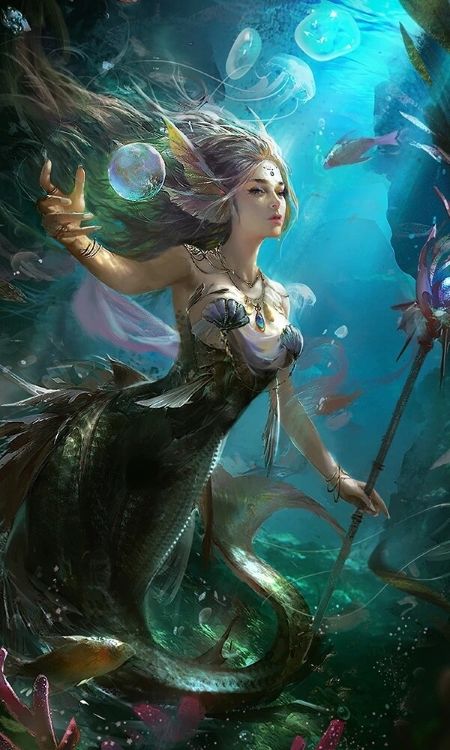 Undines are said to thrive in clear, flowing water, finding their greatest comfort in the dynamic energy of currents and streams. Their presence is often associated with vitality and purity, as if they themselves embody the life-giving essence of freshwater. It is believed that their presence enhances the health and clarity of the waters they inhabit, bringing a sense of balance and harmony to these natural environments. This association with purity and vitality further cements their role as benevolent spirits of freshwater sources.
The Essence of Udines
The essence of undines is deeply intertwined with water and its inherent properties. They embody the fluidity, adaptability, and life-giving qualities of this essential element, said to control the flow of rivers, the spray of waterfalls, and the depths of lakes. This connection to water also extends to the realm of emotions and intuition, as water is often symbolically linked to feelings, dreams, and the subconscious mind. Undines share this association, embodying the ebb and flow of emotions and the depths of human feeling. Finally, their essence is also defined by beauty and grace; their ethereal appearance and fluid, graceful movements are a consistent theme in their depictions, further emphasizing their connection to the elegant and ever-changing nature of water.
Udines and Their Symbolic Associations
Undines embody the very essence of water, reflecting its fluidity, adaptability, and life-giving qualities. They are often depicted as having influence over various bodies of freshwater, from the flow of rivers and the spray of waterfalls to the still depths of lakes. This deep connection to water also links them to the realm of emotions and intuition, as water is frequently used symbolically to represent feelings, dreams, and the subconscious mind. Their ethereal beauty and graceful movements further reinforce this association, creating an image of captivating, otherworldly beings.
However, undines are not simply gentle spirits. They are generally considered alluring and captivating, yet also potentially dangerous, reflecting the unpredictable nature of water itself. Often portrayed as lonely and longing for connection with humans, some legends suggest they lack a human soul, attainable only through marriage to a human, a motif that frequently leads to tragic tales of love and loss. Symbolically, undines represent the depths of human emotions and the hidden aspects of the psyche, embodying femininity, intuition, and the power of emotions. As embodiments of life-giving water, they also symbolize life and renewal, while their capacity for both gentleness and power reflects the duality of nature itself.
Udines in Art and Literature
In literature and art, undines have inspired numerous works, frequently appearing in romantic and often tragic narratives. Their captivating beauty and connection to the powerful element of water have made them compelling subjects for artistic exploration. From classical literature to modern fantasy, undines embody a complex blend of allure and danger, often entangled in stories of love, loss, and the clash between the human world and the natural realm. This enduring presence across various artistic mediums testifies to their lasting impact on the imagination and their continued role as a fascinating and evocative figure in mythology and fantasy.
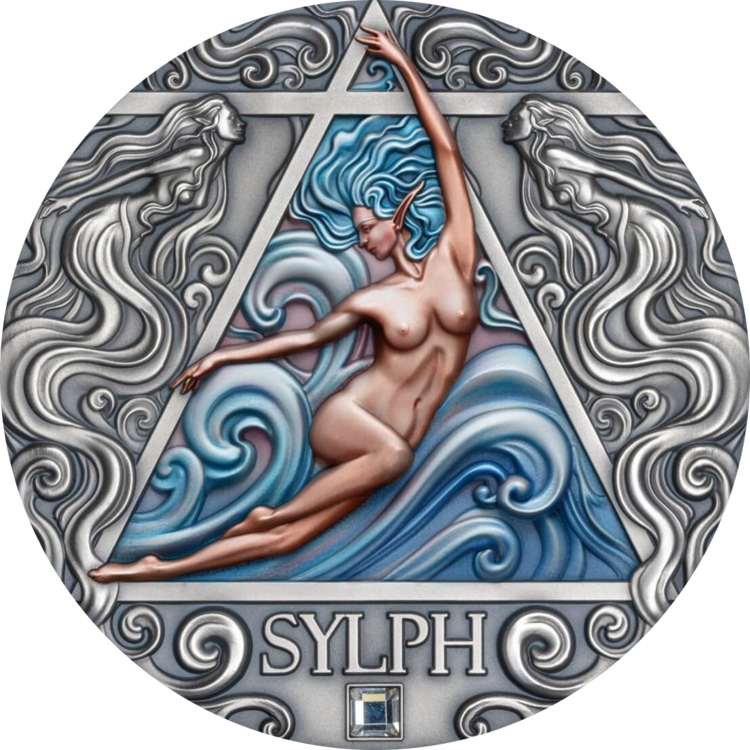
Antique Colorized High Relief Coin
Third issue from the series: “The Elementals Series”
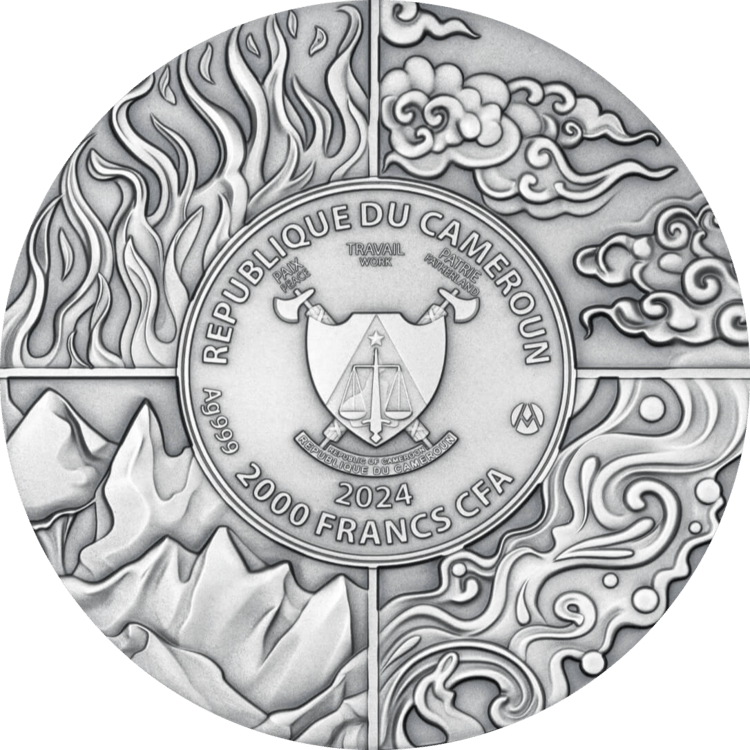
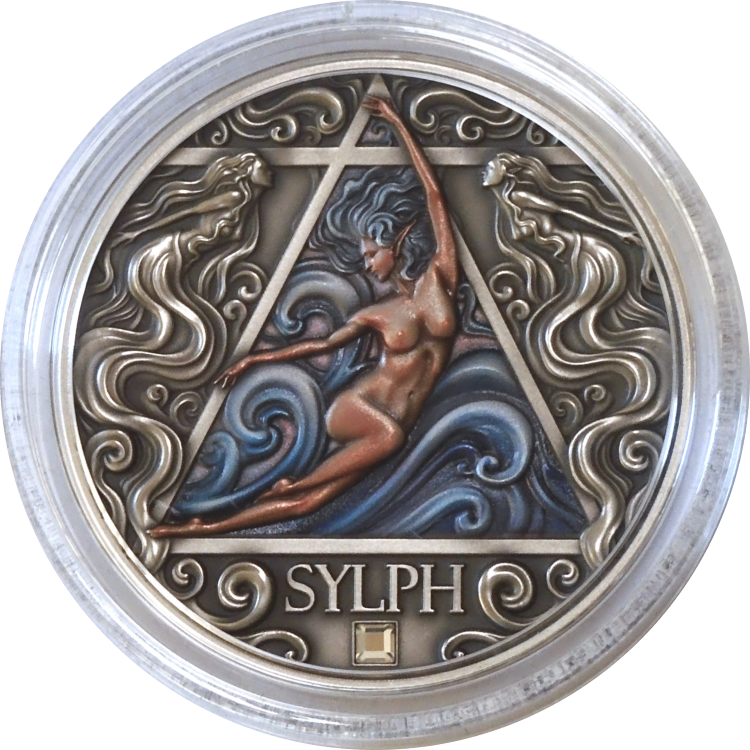
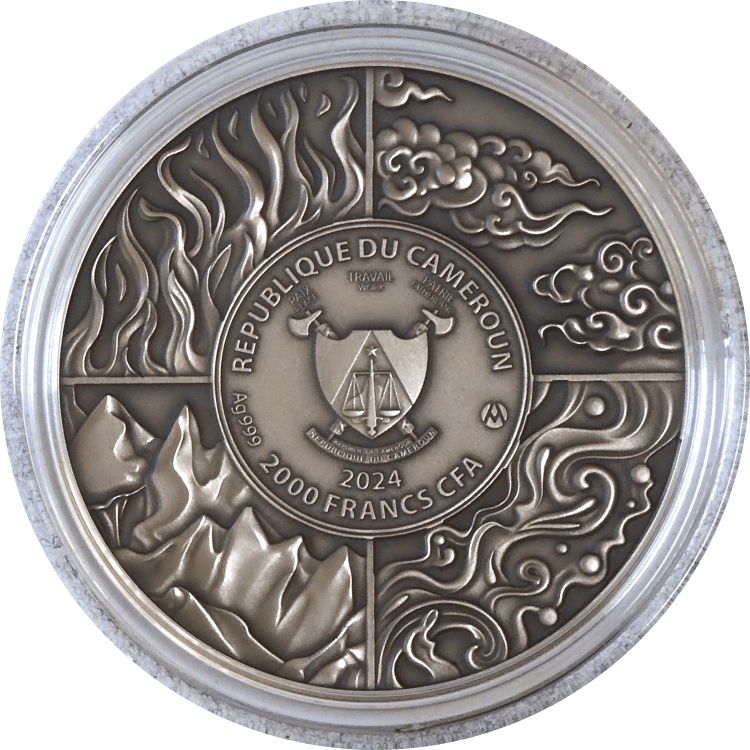
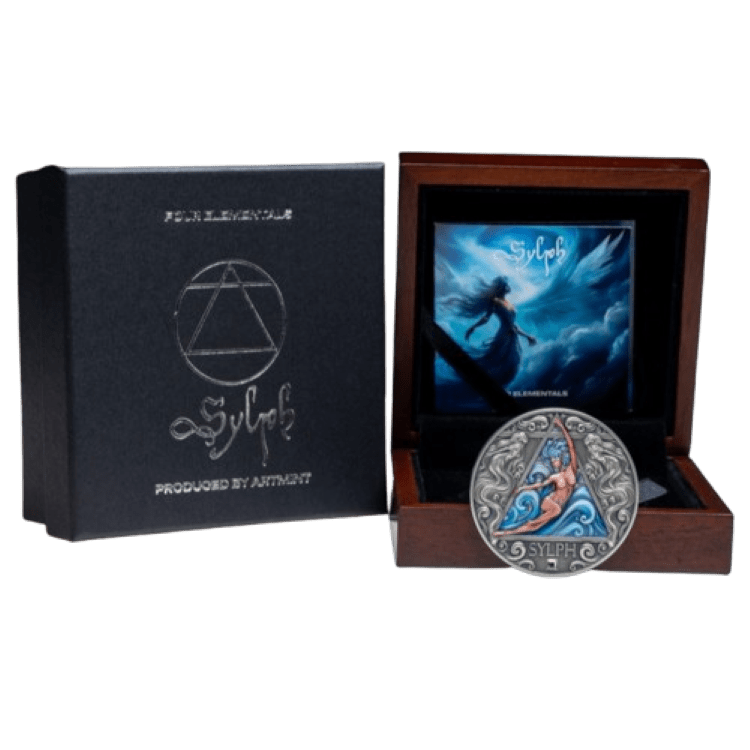
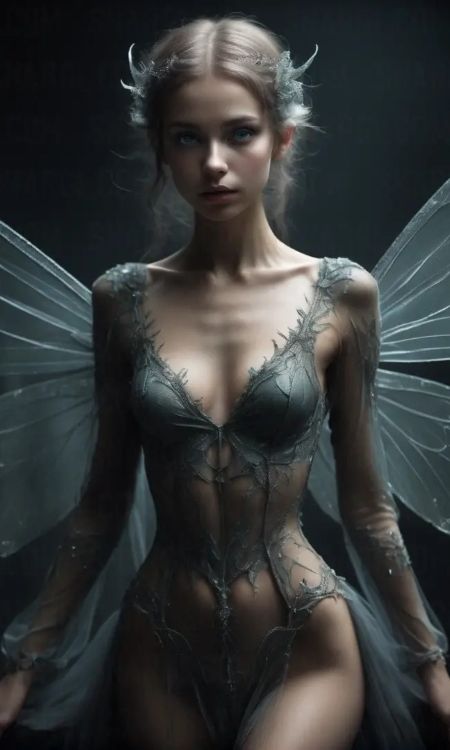 Sylphs are often perceived as guardians or spirits of natural spaces, particularly those characterized by air’s influence, such as forests where breezes rustle through the leaves, mountaintops where the air is thin and pure, and vast open spaces swept by the wind. They are frequently described as beings of exceptional beauty and grace, possessing an ethereal quality that evokes a sense of otherworldly charm. Their movements are characterized by agility and elegance. As spirits of the air, sylphs inherently represent freedom and independence, embodying the ability to move without restraint, unburdened by earthly limitations.
Sylphs and Their Symbolic Associations
Sylphs, as beings of the air, are deeply connected to the realms of intellect and thought. They symbolize the world of ideas, mental activity, and the power of the mind. This association extends to representing clarity of thought, the spark of inspiration, and the boundless potential of imagination. Because air is the very medium through which sound and speech travel, sylphs are also intrinsically linked to communication and language, embodying the expression and exchange of ideas. Furthermore, the ever-shifting nature of the wind connects them to concepts of change, adaptability, and the capacity for transformation.
Beyond intellect and communication, sylphs embody freedom, liberation, and independence. Their depictions emphasize delicacy and grace, symbolizing elegance and refinement. They are often seen as muses, inspiring artistic expression.
Sylphs in Art and Literature
Renaissance and Baroque Art, although not always explicitly labeled as “sylphs,” often featured airy figures and spirits in paintings and engravings. These figures embodied the element of air or represented allegorical concepts. Alexander Pope’s “The Rape of the Lock” (1712-1714) is perhaps the most famous literary work featuring sylphs. Pope portrays them as guardians of women’s virtue and beauty, intervening in the social lives of fashionable society. Ariel, a prominent sylph in the poem, warns the protagonist Belinda of impending doom.
Antique Colorized High Relief Coin
Fourth issue from the series: “The Elementals Series”
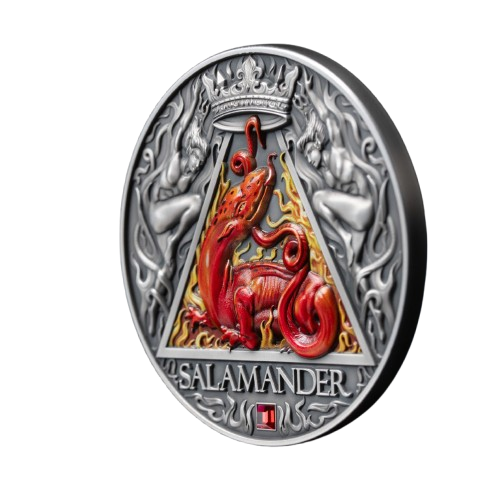
Realms of the Salamander
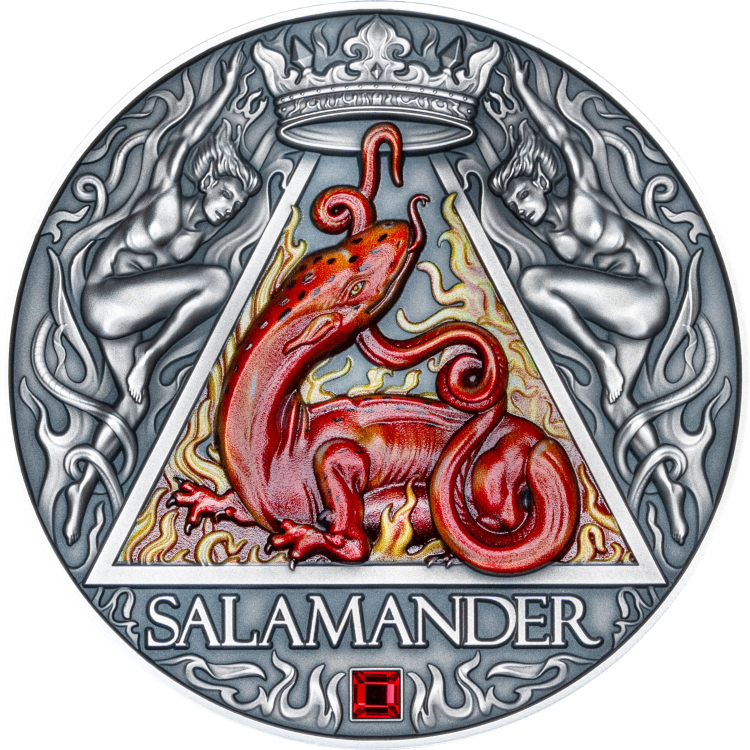
The most obvious habitat for these creatures is within flames themselves. They are believed to dwell within ordinary fires, magical fires, and even the heart of volcanoes. As places of intense heat and molten rock, volcanoes are considered prime territory for salamander elementals. They might reside in the volcanic craters, within the lava flows, or deep within the Earth’s fiery core. Deserts, scorched earth, and lands perpetually ablaze are also considered suitable habitats. These harsh environments reflect the salamanders’ fiery nature and their ability to thrive in extreme heat.
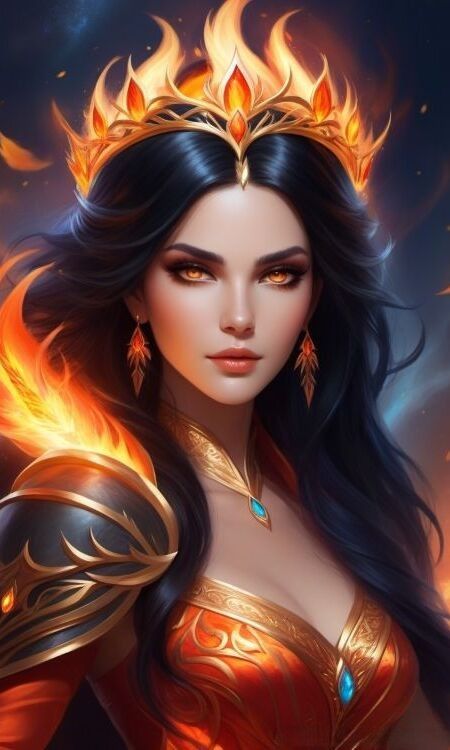 The Essence of Salamander
The essence of salamander elementals is inextricably linked to the element of fire, embodying its dynamic and transformative nature. They represent not only physical fire, such as flames and heat, but also the inner fire of passion, energy, and will. They embody the qualities of fire: purification, destruction, and creation. Salamanders are often associated with intense energy, both constructive and destructive, reflecting fire’s ability to both warm and consume. 1 They represent the driving force of life, the spark of inspiration, and the power of transformation, mirroring fire’s ability to change substances and landscapes. This essence makes them potent symbols of change, rebirth, and the raw power of the natural world.
Salamanders and Their Symbolic Associations
Salamanders are fundamentally linked to fire, embodying it both physically and metaphorically. This connection manifests in their association with heat and light, representing energy, illumination, and visibility. Fire’s transformative power, encompassing destruction and renewal, is also reflected in these creatures, linking them to life’s cyclical nature and the potential for change. This fiery essence further symbolizes intense emotions, passion, creativity, and the vital inner fire that drives individuals.
Beyond these tangible qualities, salamanders also embody more abstract concepts. Fire’s historical role in purification rituals connects them to cleansing, both physical and spiritual. Their perceived ability to withstand flames symbolizes strength, resilience, and the power to overcome challenges. In many traditions, fire’s association with magic and the supernatural imbues salamanders with magical powers. Within alchemical traditions, they were considered elemental spirits of fire, playing a key role in transformative processes. These multifaceted associations have established salamander fire elementals as powerful symbols in mythology, folklore, literature, and art, representing the complex nature of fire and its myriad interpretations.
Salamanders in Art and Literature
Salamander elementals have long captivated artists and writers, appearing in diverse forms across various mediums. In literature, they range from monstrous, fire-breathing dragons to more subtle representations of inner passion and transformative power. They often symbolize resilience and the ability to endure hardship, reflecting their supposed immunity to flames. In art, salamanders are frequently depicted amidst flames, their vibrant colors contrasting with the dark surroundings, emphasizing their connection to the fiery element. From ancient alchemical illustrations to modern fantasy art, they serve as potent visual metaphors for transformation, purification, and the raw energy of the natural world. Their presence in both classic and contemporary works underscores their enduring symbolic power and their continued relevance in artistic expression.





Leave a Reply