

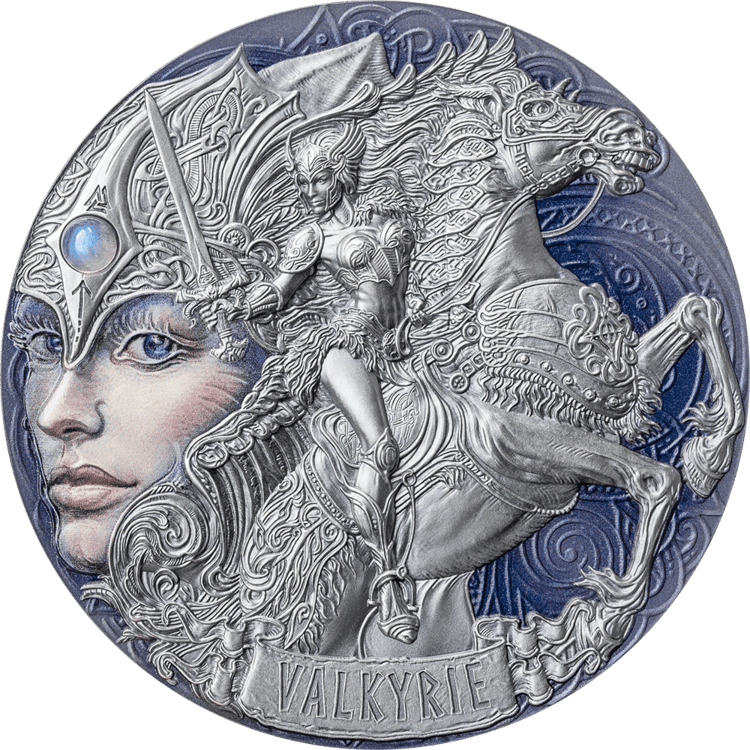
Fine Silver
Antique Colorized High Relief Coin
The Femina Bellator Series
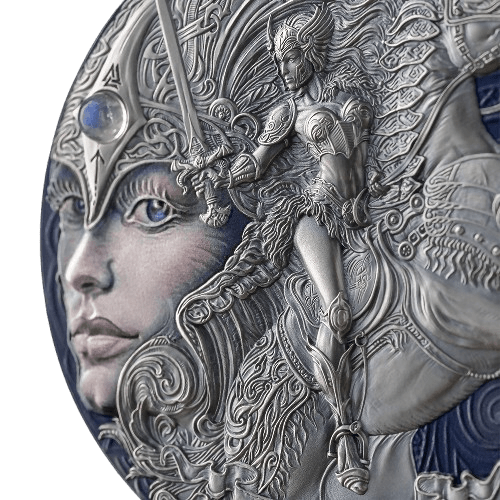
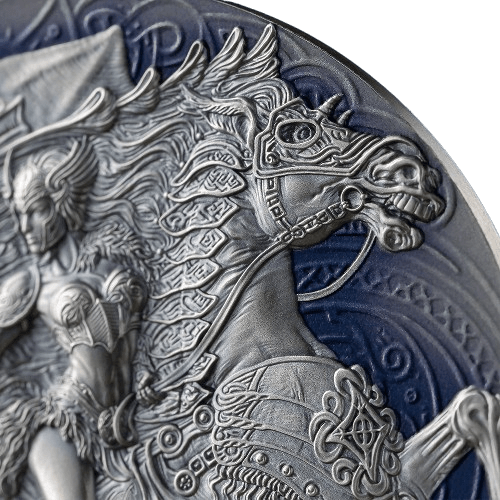
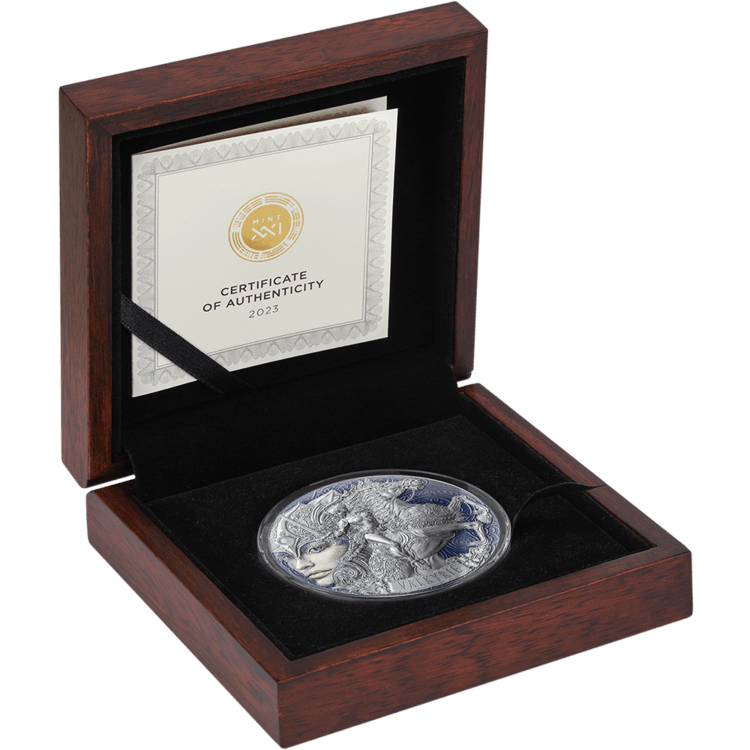

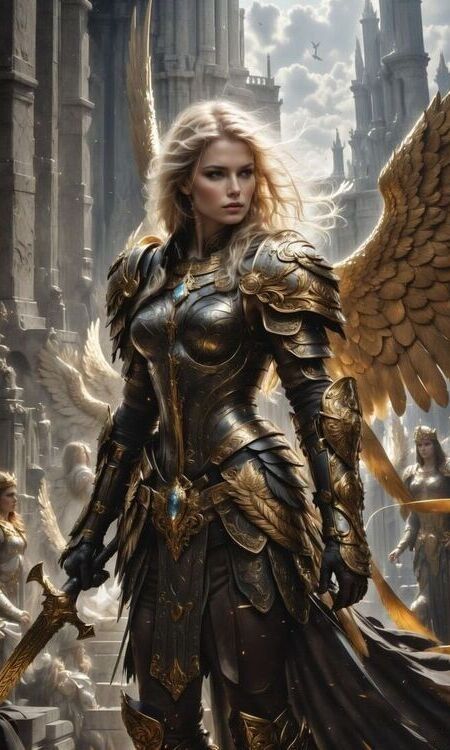
From Valkyrie to Mortal Woman:
Brynhildr, also known as Brunhild in some Germanic traditions, is a profoundly tragic figure in Norse mythology. Initially a Valkyrie, a powerful warrior woman closely associated with the god Odin, her story is marked by disobedience, love, betrayal, and ultimately, a tragic demise. Her connection to Odin and her initial status as a Valkyrie sets the stage for the dramatic events that unfold.
Brynhildr’s tale begins with her role as Odin’s Valkyrie, tasked with the important duty of selecting brave warriors fallen in battle and escorting them to Valhalla. However, a pivotal moment occurs when she disobeys Odin’s direct command. As recounted in the Völsunga Saga, Odin instructs her to determine the outcome of a conflict between two kings, Hjalmgunnar and Agnar, favoring Hjalmgunnar’s victory. Brynhildr, however, chooses Agnar, incurring Odin’s wrath. Consequently, he punishes her by stripping her of her Valkyrie status and condemning her to a mortal life. Subsequently, she is imprisoned in a remote fortress atop Mount Hindarfell, surrounded by a ring of fire and placed under a sleeping spell, to be awakened only by a hero brave enough to cross the flames. This hero arrives in the form of Sigurd (also known as Siegfried), a renowned dragon-slayer, who fearlessly rides through the fire and awakens her with a kiss.
The Weight of Fate and Revenge:
Brynhildr and Sigurd fall deeply in love, and he pledges to marry her. However, fate and the machinations of others soon intervene. Through magic and deception orchestrated by the sorceress Grimhild, Sigurd is tricked into forgetting his promise to Brynhildr and instead marries Gudrun, Grimhild’s daughter. This sets in motion a tragic sequence of events that will have devastating consequences for all involved.
Subsequently, further deception occurs as Sigurd, disguised as Gunnar (Gudrun’s brother), wins Brynhildr’s hand in marriage on Gunnar’s behalf. Unaware of this elaborate ruse, Brynhildr is forced to marry Gunnar, believing Sigurd has betrayed her love. When the truth is eventually revealed, Brynhildr is consumed by rage and a desire for revenge. She manipulates Gunnar into killing Sigurd, but this act of vengeance provides no solace. Overwhelmed by grief and guilt, Brynhildr takes her own life, joining Sigurd on his funeral pyre. Some accounts suggest she orchestrated her own death, seeking reunion with Sigurd in the afterlife. Brynhildr’s complex character, a blend of strength, independence, and victimhood, makes her story a powerful exploration of love, betrayal, revenge, and the conflict between free will and destiny, cementing her place as a key figure in Norse mythology.
Antique Colorized High Relief Coin
The Femina Bellator Series
Conceptions and Interpretations of the Amazons:
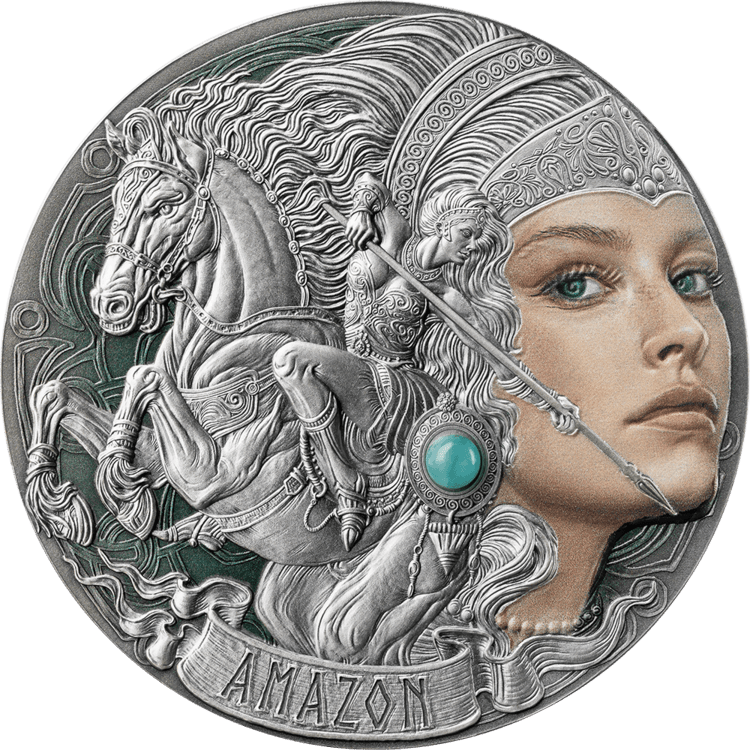
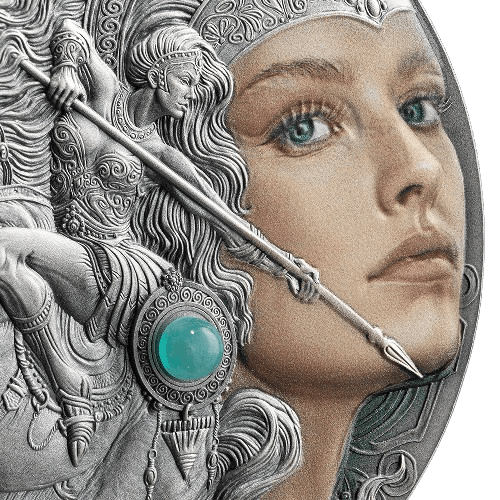
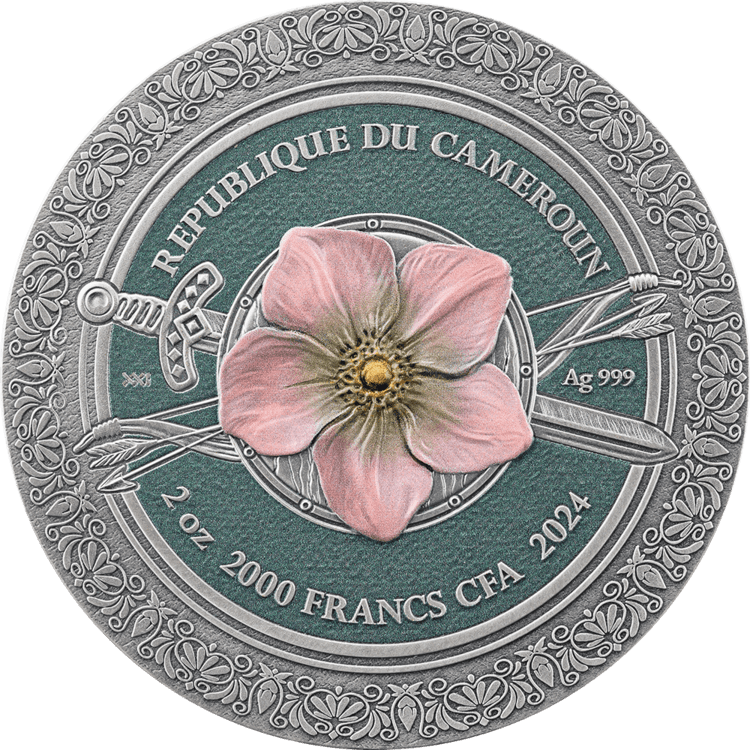
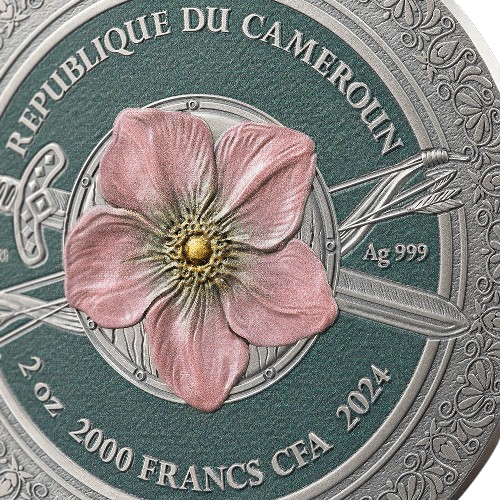
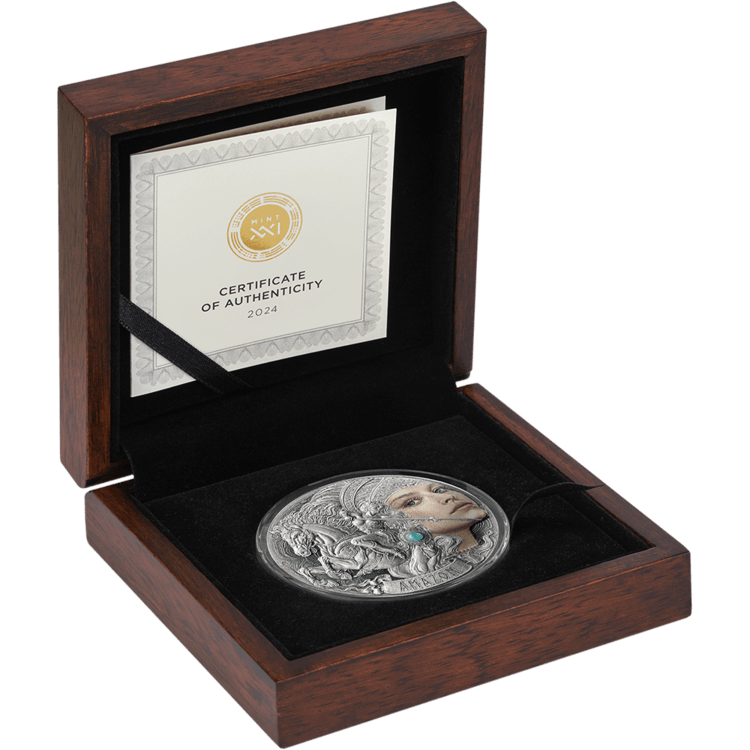
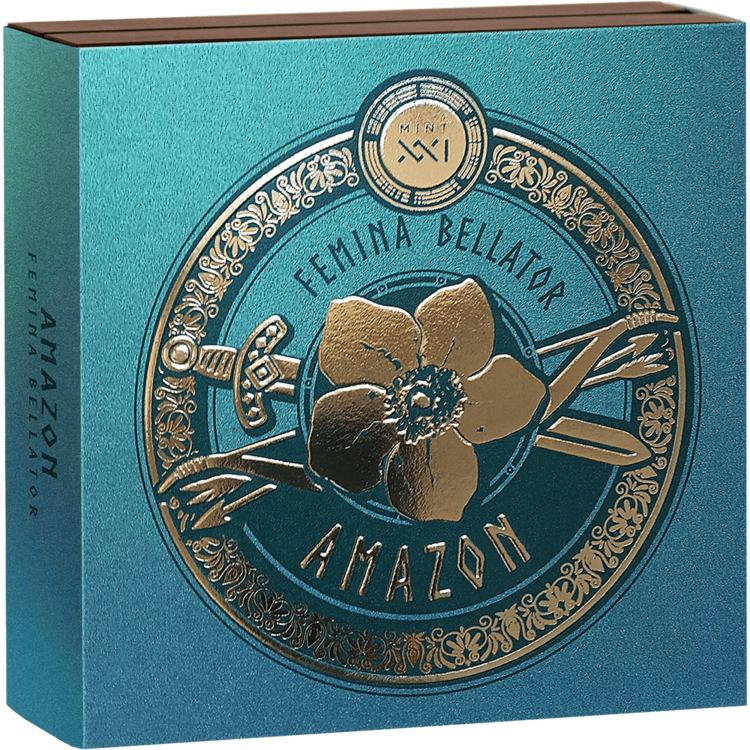
The Amazons were essentially conceived as a mirror image of Greek male society, participating in traditionally masculine pursuits such as riding, hunting, and warfare. Popular legend, lacking historical confirmation, claimed they removed their right breast to enhance their archery and spear-throwing. Various interpretations of the term “Amazon” exist, with some interpreting it as “breastless,” while others suggest meanings like “one breast” or “not breast-fed.” Alternative theories propose different origins for the name; one suggests a Persian derivation meaning simply “warrior,” and another links it to Armenian, meaning “Moon-goddess,” referencing armed priestesses of the Moon near the Black Sea.
Amazonian Warfare and Art:
Ancient Greek art notably never depicts Amazons with a missing breast. Historian Adrienne Mayor suggests the confusion about this detail originates from the similarity between “mazon” and the Greek word for breast, “mastos.” Artists typically portray Amazons in art wearing hoplite armor and riding horses, primarily armed with bows and spears, although axes also appear in some depictions. They were considered not only skilled warriors but also masters of both ambush and cavalry tactics.
Hippolyta, embodying the strength, independence, and complex nature of the Amazonian women, stands as a compelling figure in Greek mythology. Her position as their queen grants her a significant place within tales of heroes, battles, and the clash of cultures.
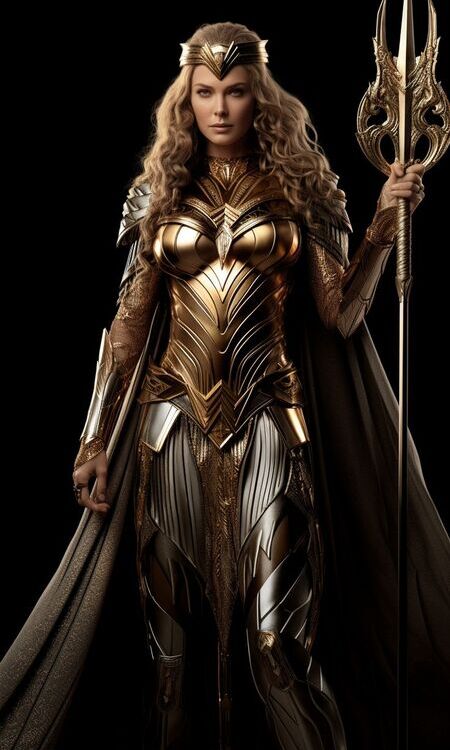 The Amazonian Queen:
Hippolyta’s parentage bridged the mortal and divine worlds: Ares, the powerful God of war, and Otrera, often considered the Amazons’ first queen, were her parents. This divine heritage gave her an innate talent for both warfare and leadership. As queen, Hippolyta ruled the Amazons, a women-only society that rejected traditional male-dominated hierarchies. They earned fame for their military skills, excelling in archery, horsemanship, and hand-to-hand combat.
A defining characteristic of Hippolyta is her possession of a magnificent girdle, a type of ornate belt or sash. This was no ordinary piece of adornment; her father, Ares, presented it to her as a significant gift, and it symbolized her royal status and inherent authority. While writers often described this girdle as crafted from gold and adorned with precious stones, its true significance extended far beyond its mere material value. The girdle was widely believed to possess powerful magical properties, frequently associated with bestowing enhanced strength, supernatural power, or directly symbolizing her important queenship.
Hippolyta and Heracles: Two Versions of a Myth:
Hippolyta’s most famous appearance in mythology is intertwined with the renowned Twelve Labors of Heracles (Hercules). As his ninth labor, King Eurystheus tasked Heracles with the challenging retrieval of Hippolyta’s girdle for his daughter, Admete. This formidable task brought the greatest Greek hero into direct conflict with the powerful Amazonian queen. One version of the myth describes Heracles arriving at Themiskyra, the Amazonian capital, where he successfully impresses Hippolyta with his legendary strength and established heroic reputation. In this account, she becomes so captivated by him that she willingly agrees to bestow the girdle upon him, emphasizing a peaceful resolution where Hippolyta recognizes Heracles’ worth and honors his respectful request.
A more prevalent and dramatically charged version of the story recounts a violent conflict fueled by Hera, the perpetually jealous wife of Zeus and constant adversary of Heracles. Hera, cunningly disguised as an Amazonian warrior, spreads insidious rumors among the Amazonian warriors, claiming that Heracles harbors intentions to abduct their revered queen. This deceptive act incites a furious and bloody battle between Heracles and his loyal companions against the fiercely protective Amazons. In the ensuing chaos of this violent confrontation, Heracles, acting either in urgent self-defense or caught in the intense thick of the fight, tragically and accidentally kills Hippolyta and subsequently takes possession of the coveted girdle. This more dramatic version powerfully highlights the significant theme of divine intervention and the devastating tragic consequences of dangerous misunderstandings and deliberate manipulation.
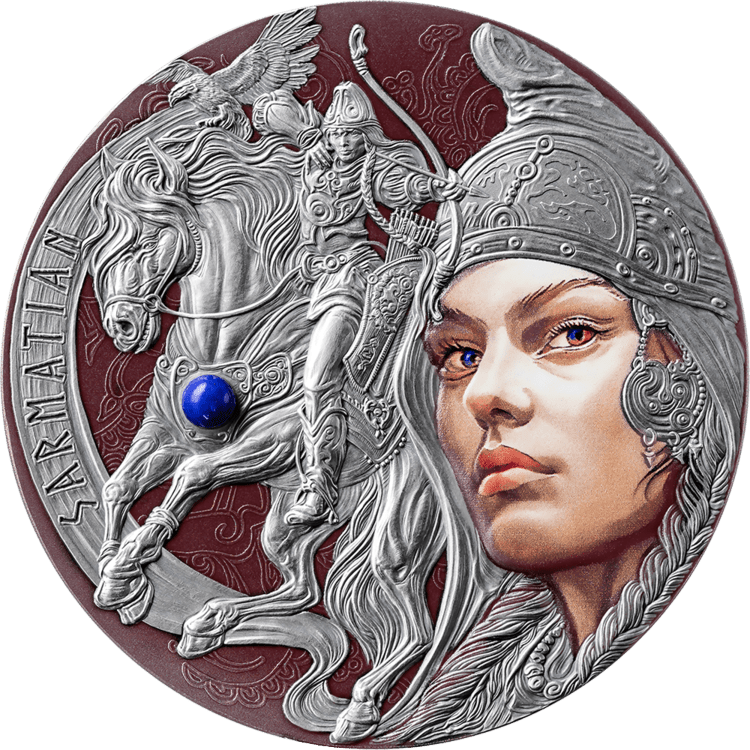
Antique Colorized High Relief Coin
The Femina Bellator Series
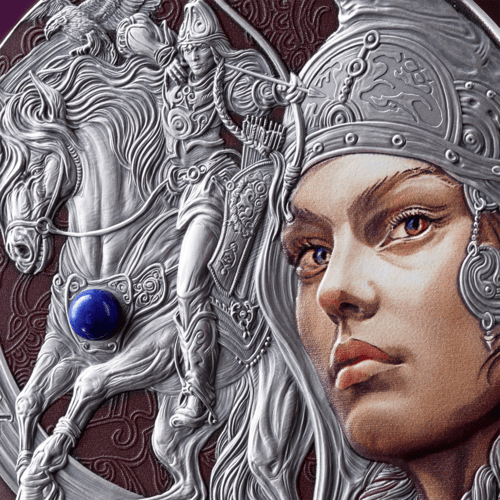
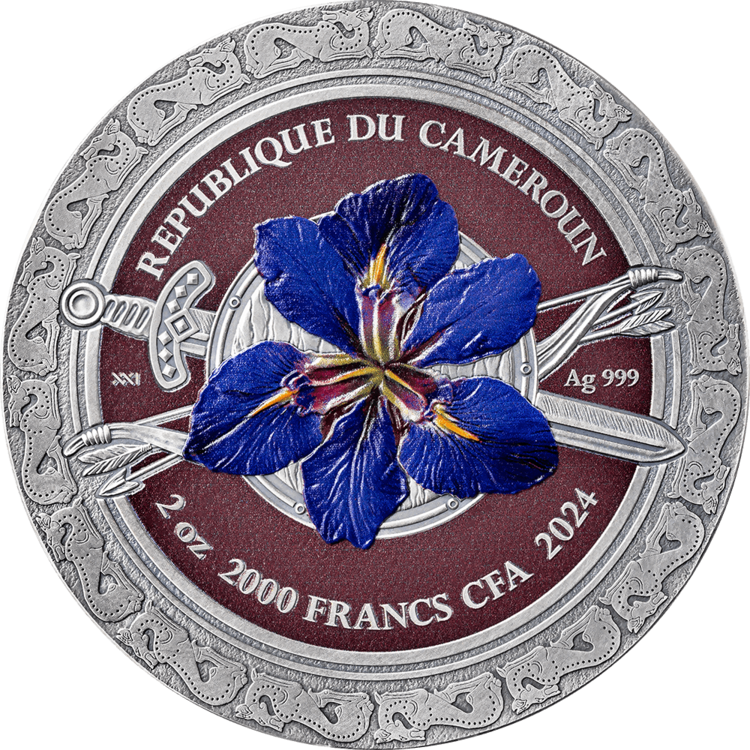
Social Roles and Theories:
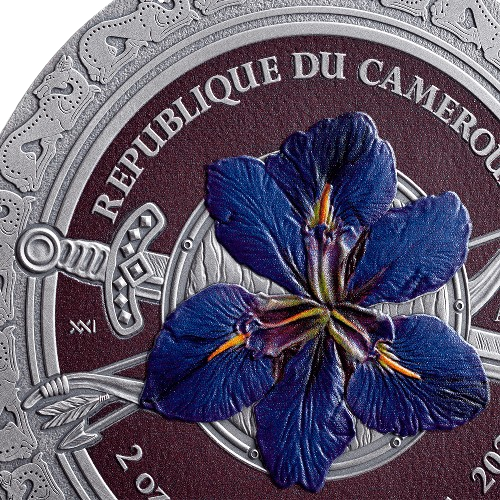
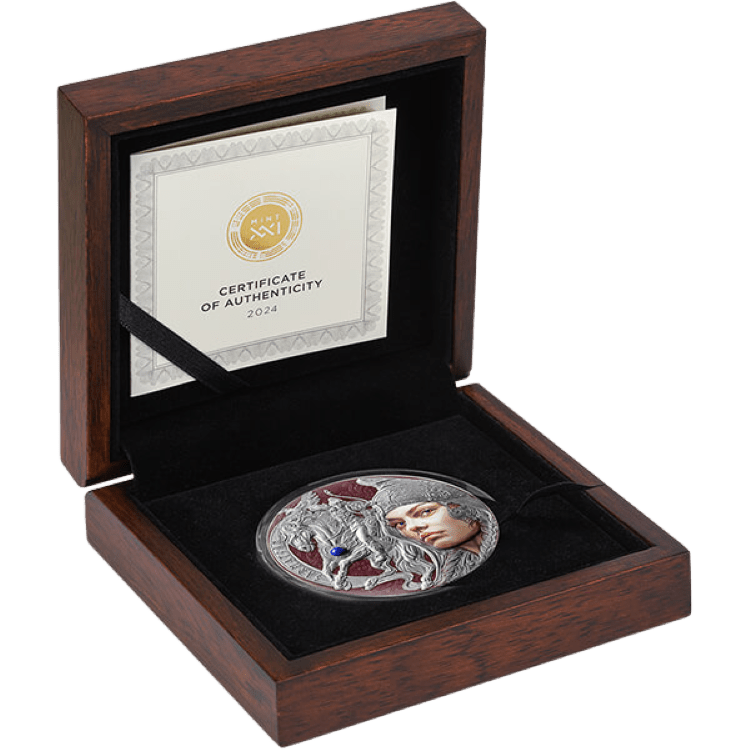
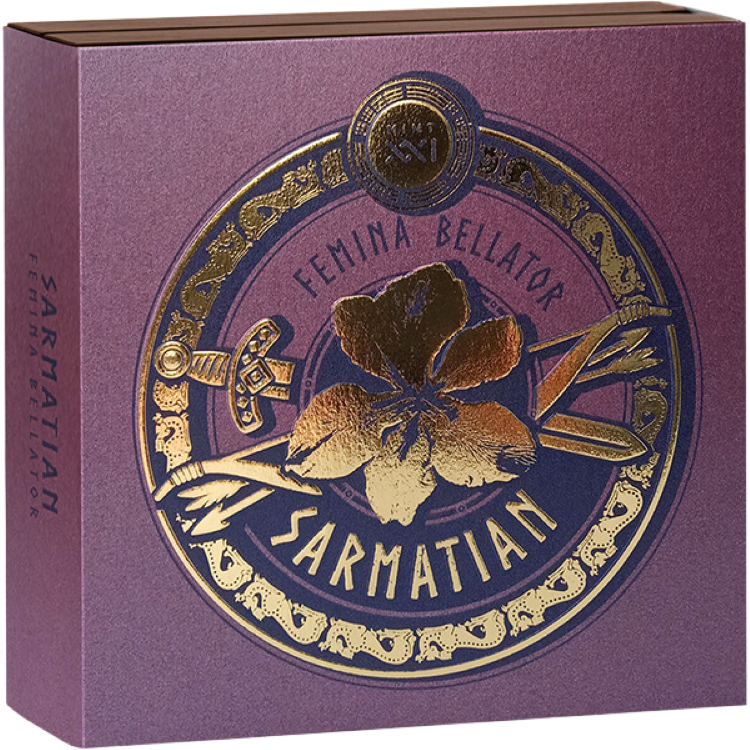
Several theories attempt to explain the unique role of women in Sarmatian society. One theory suggests that the nomadic lifestyle of the Sarmatians, which involved frequent migrations and warfare, necessitated women’s participation in all aspects of life, including combat.
Another theory proposes that the Sarmatians preserved elements of an older, more egalitarian social structure where women enjoyed greater equality. Regardless of the exact reasons, the evidence clearly indicates that Sarmatian women played a significant role in their society, both as warriors and as influential figures within their communities.
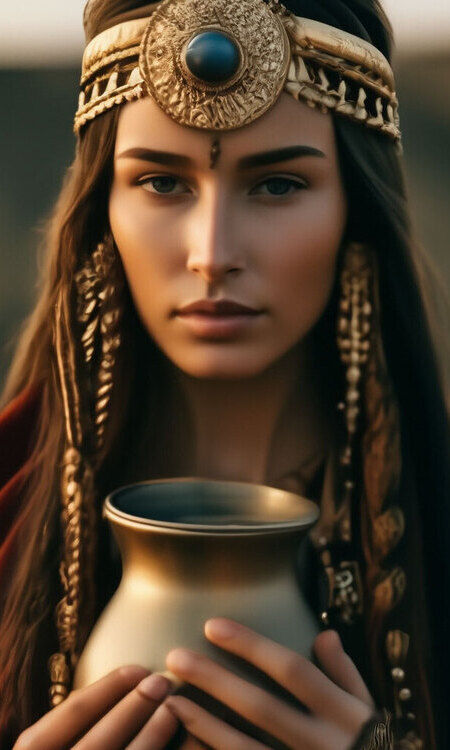 The Sarmatian Women: Inspiration and Evidence
The Sarmatians eventually declined and other groups absorbed them, but their legacy, particularly the image of their warrior women, has endured. Their stories likely contributed to the myths and legends of the Amazons in Greek mythology, and they continue to fascinate and inspire today. The Sarmatian warrior women stand as a testament to the strength, courage, and resilience of women in ancient societies, challenging traditional notions of gender roles and demonstrating the diverse ways in which women have contributed to history.
Although no single Sarmatian woman has a name widely known today, their collective impact is undeniable. They were the real-life inspiration behind the Amazon myths, their archaeological remains confirm their warrior status, and their culture challenged traditional gender roles. This combination of historical accounts, archaeological evidence, and cultural impact solidifies the legendary status of Sarmatian women warriors. They stand as a testament to the strength, courage, and independence of women in ancient societies.
The Fate of the Sarmatian Culture:
It’s important to clarify that Sarmatian women, as a distinct cultural group within the broader Sarmatian society, didn’t “die out” in the sense of a complete extinction. Rather, their unique cultural practices, including their prominent role as warriors, gradually faded as other populations assimilated and integrated the Sarmatians themselves.
In the later centuries of their existence, the Sarmatians faced increasing pressure from various migrating groups, most notably the Goths and later the Huns. These invasions disrupted their traditional way of life, leading to displacement, warfare, and the loss of their territories. As they were forced to move and interact with other cultures, their distinct customs, including the role of women in warfare, began to change.
Over time, the Sarmatians lost their distinct cultural identity as larger groups absorbed them. This meant that they gradually abandoned or forgot their unique customs, including the tradition of women warriors.
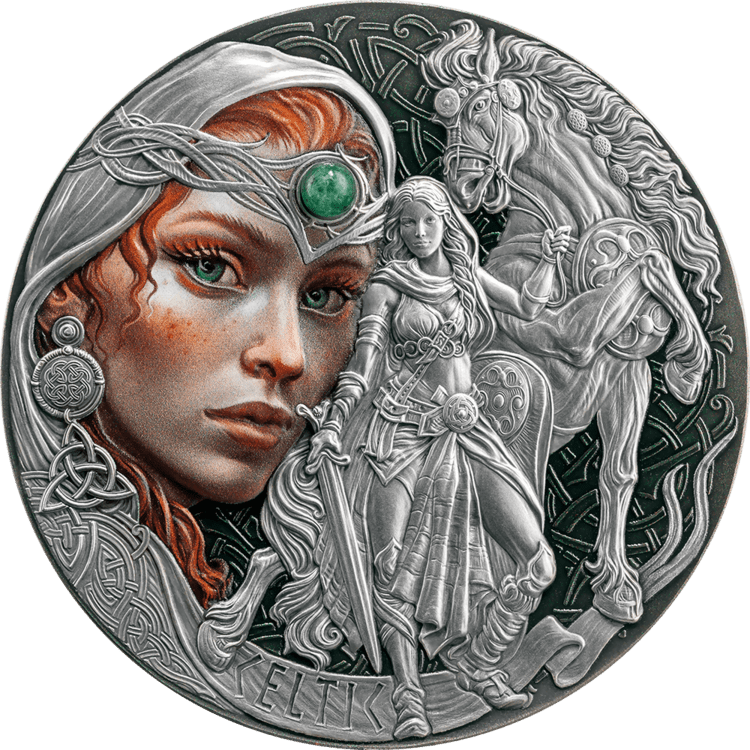
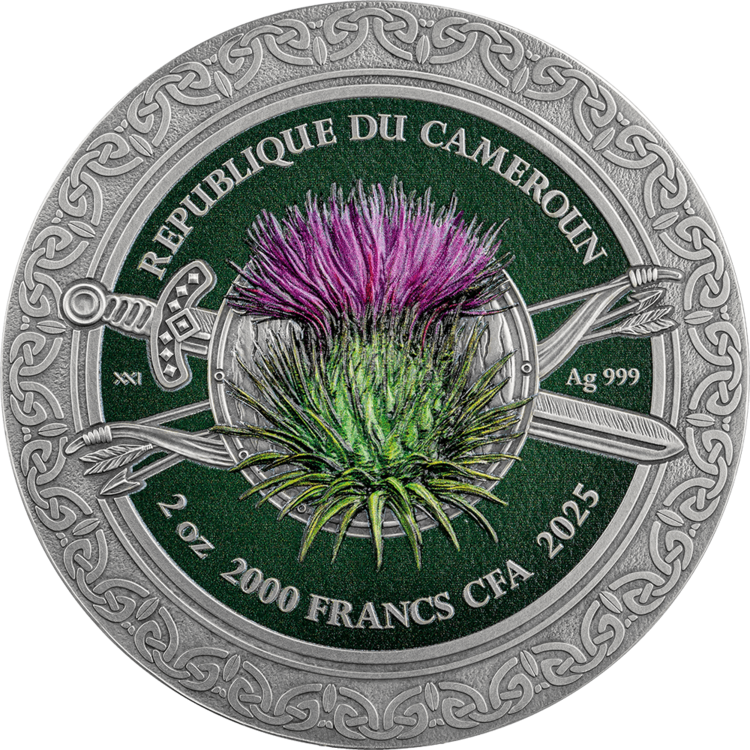
Antique Colorized High Relief Coin
The Femina Bellator Series
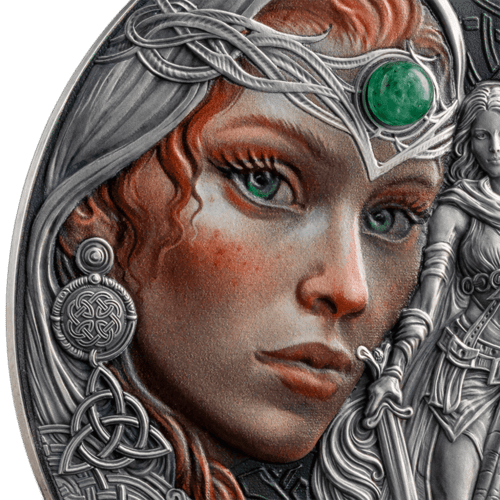
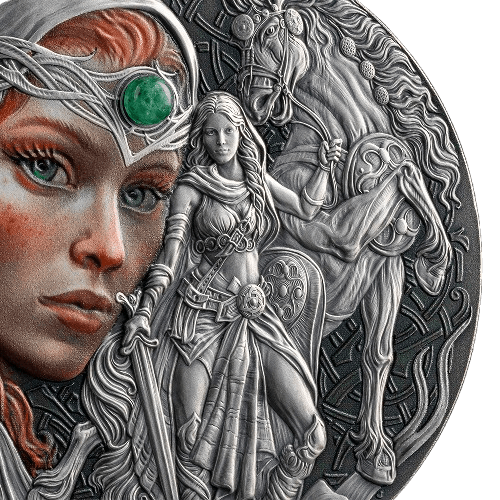
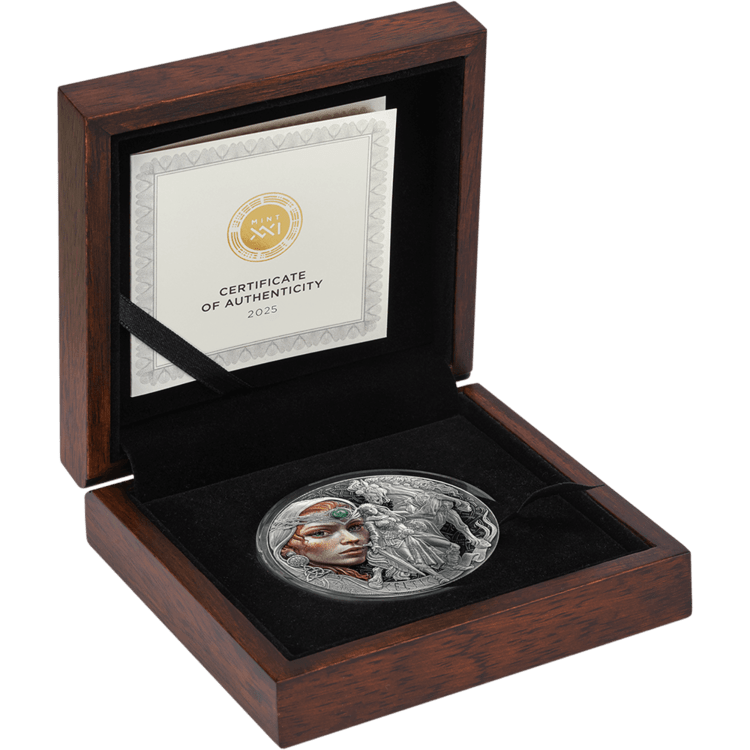
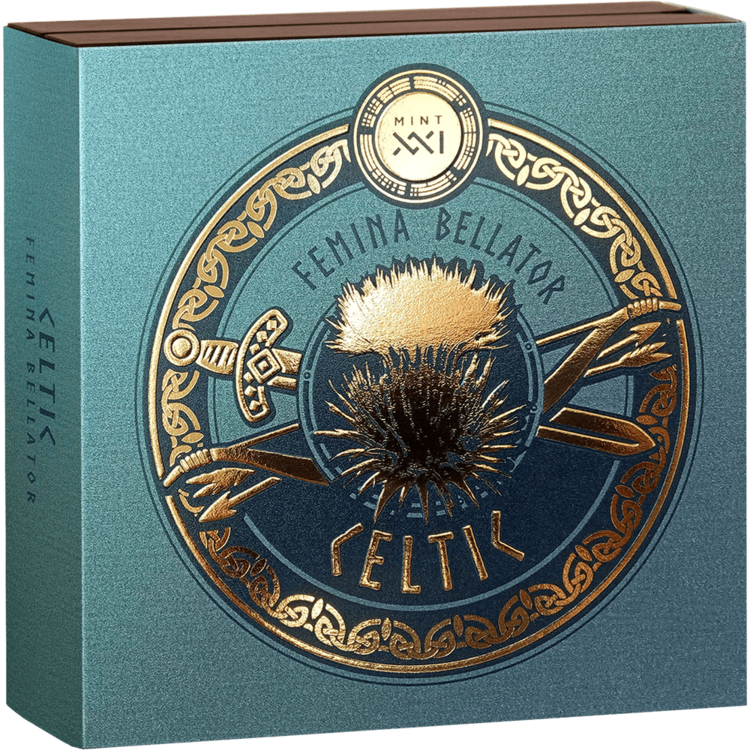
Scáthach: Warrior and Teacher
Scáthach, often called “The Shadowy One,” is a prominent figure in Irish mythology, particularly within the Ulster Cycle. She is renowned as a fierce warrior woman and a skilled martial arts teacher who resided in Dún Scáith, meaning “Fortress of Shadows,” located on the Isle of Skye in Scotland.
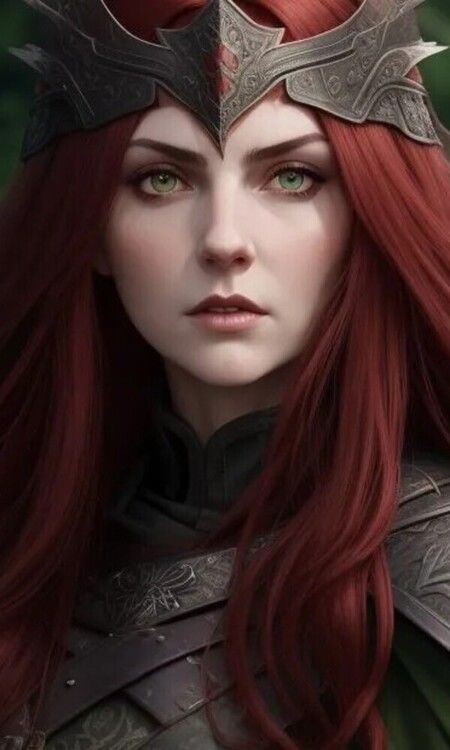 Scáthach was not just a warrior; she mastered combat, magic, and prophecy. She possessed exceptional fighting skills and employed rigorous training methods. Warriors from all over sought her tutelage, eager to learn from the best. Her training grounds challenged and demanded much of warriors, pushing them to their limits. She imparted knowledge not only in physical combat but also in strategy, tactics, and the art of war.
Her most famous student was the legendary Irish hero Cú Chulainn. In the tale of “Tochmarc Emire” (The Wooing of Emer), people sent Cú Chulainn to Scáthach to complete his warrior training as part of the conditions to marry his beloved Emer. Under Scáthach’s guidance, Cú Chulainn underwent intense training, mastering various combat techniques and weapons. She gifted him with the legendary spear Gáe Bulg, a weapon with a unique and deadly ability.
Scáthach: Mystic and Legacy
While her role as a trainer is central to her character, Scáthach’s significance extends beyond that. People often associate her with the otherworld, and she possesses magical powers. Some accounts portray her as a gatekeeper to the land of shadows or even a goddess associated with death and the afterlife. Her name, “The Shadowy One,” further reinforces this connection to the mystical and unseen.
Scáthach’s legacy as a warrior, trainer, and mystical figure has endured through centuries of Irish and Scottish folklore. She represents female empowerment, skill, and wisdom. She undeniably influenced Cú Chulainn’s development as a hero, and her contributions to Celtic mythology continue to inspire and fascinate those interested in ancient lore and warrior cultures.




Leave a Reply