

First issue from the series: “Nautical Ounce”
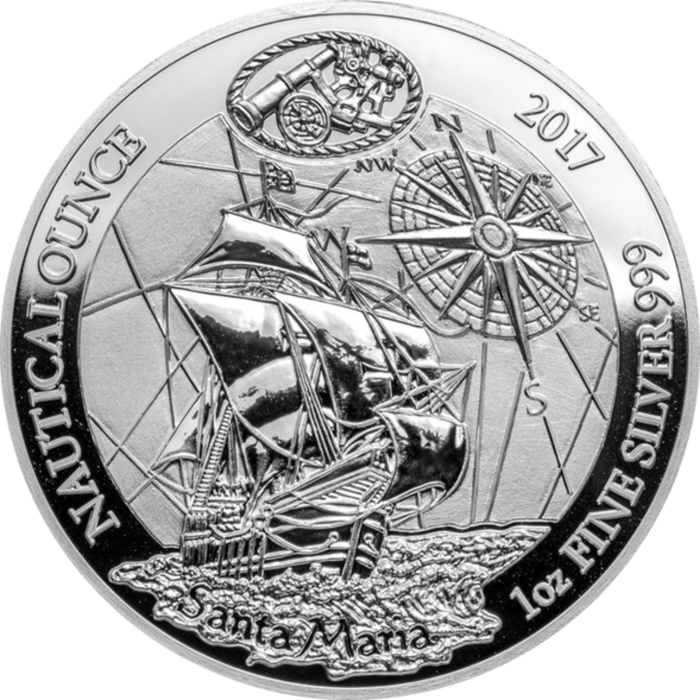
The esteemed Bavarian State Mint in Munich, Germany, meticulously crafted the Santa Maria Nautical Ounce Silver Coin, a numismatic tribute to one of history’s most pivotal voyages. They envisioned this coin as a tangible commemoration of Christopher Columbus’s 1492 expedition, specifically honoring the Santa Maria, the flagship that led the way to the Americas. The coin’s design, featuring a gleaming proof finish, sought to capture the essence of this legendary vessel. They presented the Santa Maria in full sail, its majestic form set against a stylized compass background, symbolizing the navigational prowess and adventurous spirit of the era. This artistic rendering not only celebrates the ship’s physical presence but also the profound historical impact of its journey.
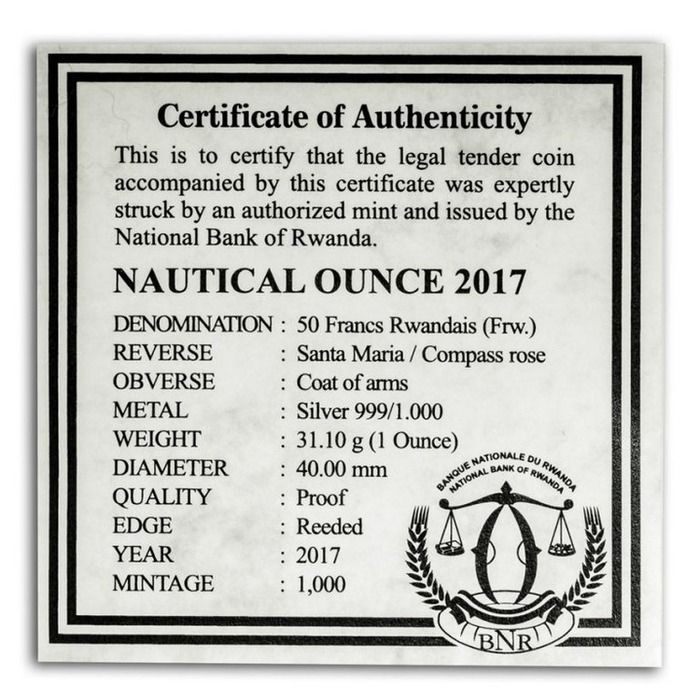
To ensure its status as a collectible of distinction, the Bavarian State Mint minted this coin for the Republic of Rwanda, imbuing it with a face value of 50 Francs. Each coin, a testament to the mint’s renowned craftsmanship, contains a precisely measured troy ounce of .999 fine silver, reflecting the purity and value of the precious metal. With a diameter of 40mm and an approximate thickness of 4mm, the coin offers a substantial canvas for the intricate design to unfold.
The proof version showcases the ship’s details with exceptional clarity, highlighting the minute features of the sails, rigging, and hull. The limited mintage of this coin, a hallmark of its exclusivity, transforms it into a highly desirable piece for both dedicated numismatists and passionate history enthusiasts. The obverse of the coin, featuring the official seal of Rwanda, further solidifies its status as a legal tender issue, blending historical commemoration with numismatic artistry.



Second issue from the series: “Nautical Ounce”
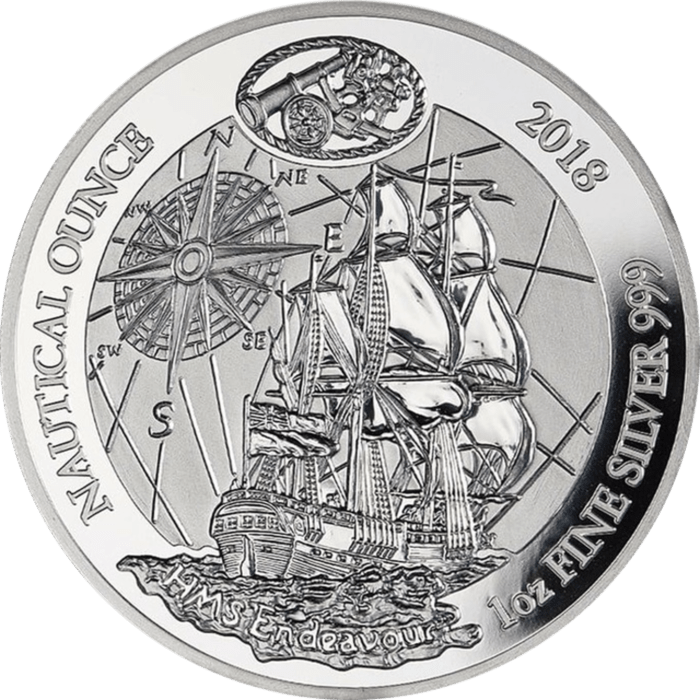
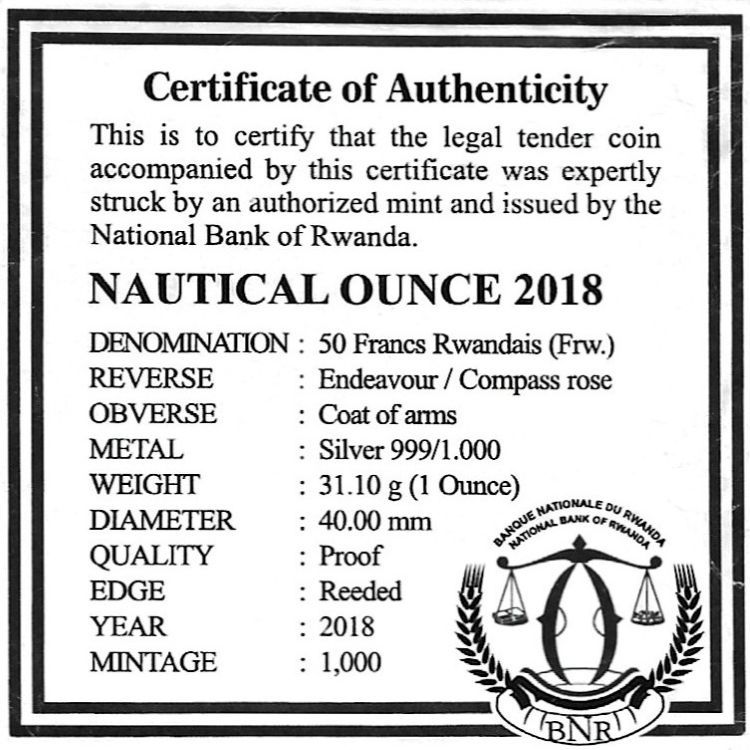
Bavarian State Mint, renowned for its precision and artistry, created the HMS Endeavour Nautical Ounce Silver Coin, a numismatic tribute to a legendary exploration vessel. They designed this coin to embody the HMS Endeavour’s historic voyages, particularly its significant role in Captain James Cook’s first voyage of discovery. The coin’s design seamlessly blends historical accuracy with artistic interpretation, showcasing the ship in full sail, its majestic form meticulously rendered. A stylized compass backdrop evokes the spirit of adventure and the navigational skill of that era. Combining a proof finish, highlighting intricate details and subtle antique accents, and adding historical authenticity brings the ship to life as a captivating numismatic artwork.
In 2018, the Bavarian State Mint minted this coin for the Republic of Rwanda, issuing it with a face value of 50 Francs (RWF), making it legal tender. Each coin, a testament to the mint’s quality, is crafted from 31.103 grams (1oz) of .999 fine silver, ensuring its value and beauty. The 40mm diameter provides ample space for the detailed design. The proof finish, achieved through advanced minting, captures the ship’s nuances and textures. The limited mintage of 1,000 pieces makes it a highly sought-after collectible for numismatists and history enthusiasts. Each coin includes a protective capsule and a certificate of authenticity, enhancing its value.
The obverse of the coin features the official seal of Rwanda, signifying its issuing authority and blending historical commemoration with numismatic artistry. This coin serves as a lasting reminder of the HMS Endeavour’s legacy and the spirit of exploration.

Third issue from the series: “Nautical Ounce”
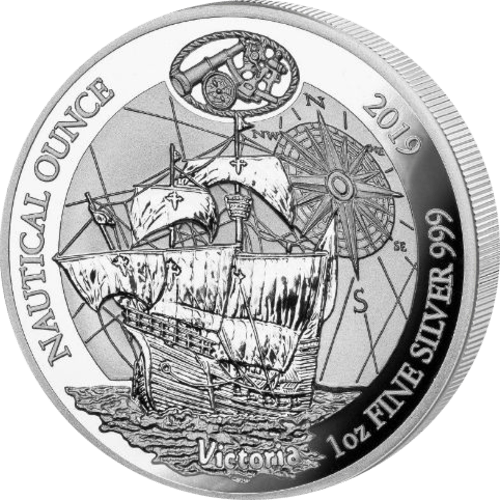
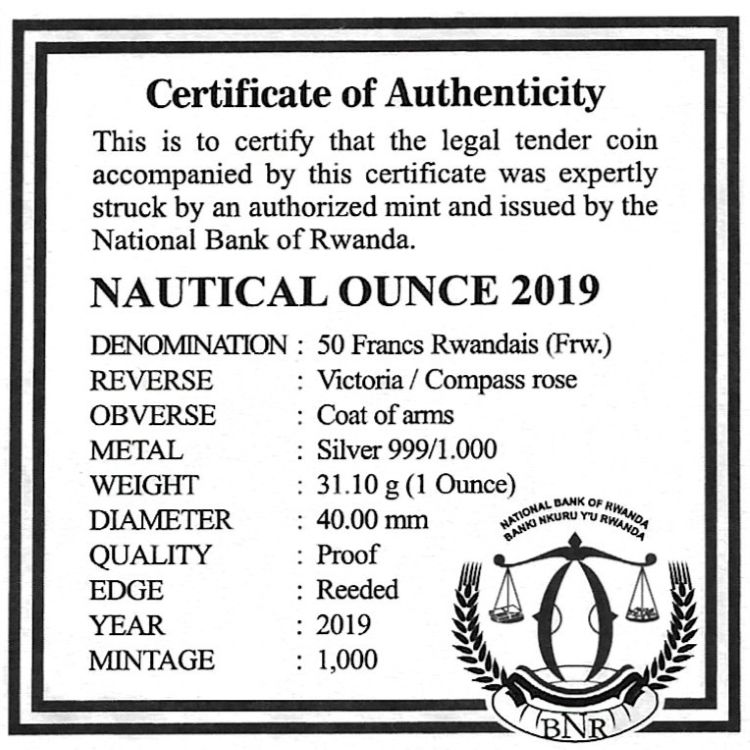
Bavarian State Mint, a name synonymous with numismatic excellence, crafted the Victoria Nautical Ounce Silver Coin. This poignant tribute to the Victoria, the last of the grand wooden ships, serves as a lasting memorial to a bygone era of maritime mastery. They envisioned the coin as a miniature masterpiece, depicting the Victoria in full sail, her elegant lines and masts rendered with meticulous detail. A backdrop of a stylized compass and nautical instruments evokes the spirit of exploration and the science of navigation. The interplay of a brilliant proof finish and antique accents brings the ship to life, creating a captivating piece of numismatic art.
In 2019, the mint struck this coin for Rwanda, imbuing it with a face value of 50 Francs (RWF), establishing its legal tender status. Each coin, crafted from 31.103 grams (1oz) of .999 fine silver, showcases the mint’s commitment to quality. Its 40mm diameter provides ample space for the intricate design. The proof finish, achieved through advanced techniques, captures the nuances of the ship’s design. The limited mintage of 1,000 pieces makes it a highly desirable collectible.
Each coin is presented in a protective capsule, accompanied by a certificate of authenticity, enhancing its collectability. The obverse, featuring Rwanda’s official seal, reinforces its issuing authority, seamlessly blending historical commemoration with numismatic artistry.



Fourth issue from the series: “Nautical Ounce”
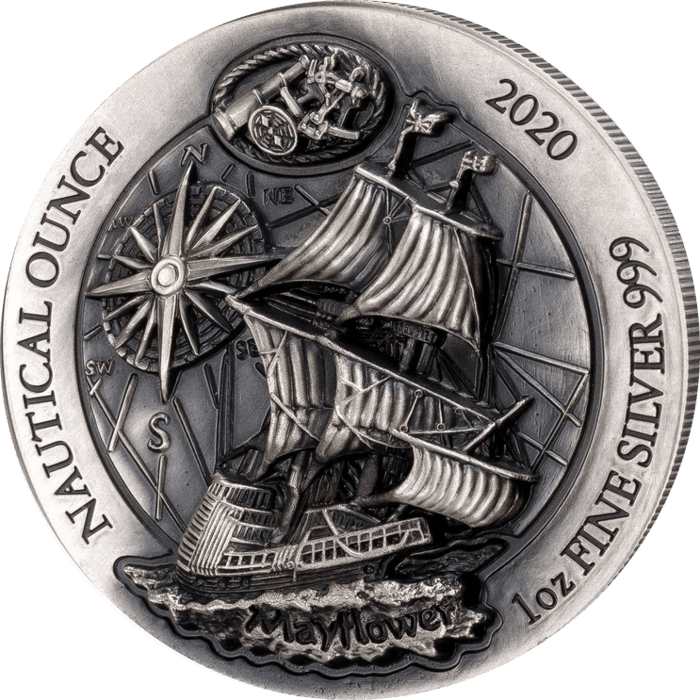
Bavarian State Mint, renowned for its numismatic artistry, created the Mayflower Nautical Ounce Silver Coin, a tribute to the iconic vessel that carried the Pilgrims to North America in 1620. They designed the coin to commemorate the Mayflower’s voyage, symbolizing religious freedom and a new society. The coin’s design blends historical accuracy and artistic interpretation, showcasing the Mayflower in full sail, its form detailed to evoke the Pilgrims’ resilience. A stylized compass recalls the navigational challenges and spirit of exploration. The antique finish and high-relief detail transform the coin into a captivating piece of art.
In 2020, the Bavarian State Mint struck this coin for Rwanda, giving it a face value of 50 Francs (RWF), making it legal tender. Each coin, crafted from 31.103 grams (1oz) of .999 fine silver, highlights the mint’s quality. With a 40mm diameter, the coin allows for detailed design. High-relief minting captures the ship’s nuances. The 1,000-piece mintage makes it a collectible for numismatists and history enthusiasts. Each coin includes a capsule and a certificate of authenticity.
The obverse of the coin features Rwanda’s official seal, highlighting its issuing authority. This coin blends historical commemoration with numismatic artistry.

Fifth issue from the series: “Nautical Ounce”
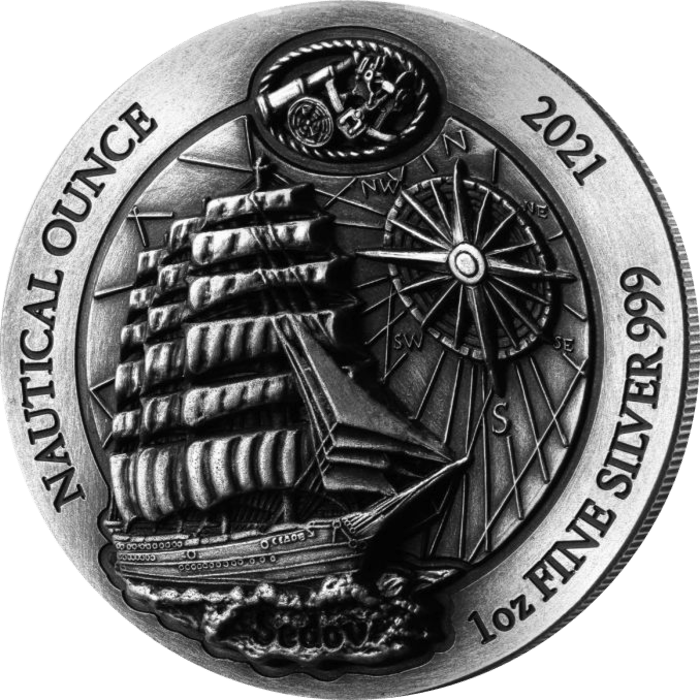
Bavarian State Mint, celebrated for its exacting standards, crafted the Sedov Nautical Ounce Silver Coin, a numismatic tribute to the majestic Sedov, one of the world’s most impressive traditional sailing ships. They conceived this coin as a lasting homage to the Sedov’s legacy, aiming to encapsulate the grandeur and historical significance of this iconic vessel. The coin’s design, a seamless fusion of artistry and precision, portrays the Sedov in full sail, its towering masts and intricate rigging rendered with remarkable detail. The backdrop, adorned with a stylized compass, evokes the spirit of maritime exploration and the timeless allure of sailing ships. The harmonious interplay of an antique finish, which imparts a sense of historical authenticity, and the dramatic high-relief technique, which breathes life into the Sedov’s form, transforms it into a captivating piece of numismatic art.
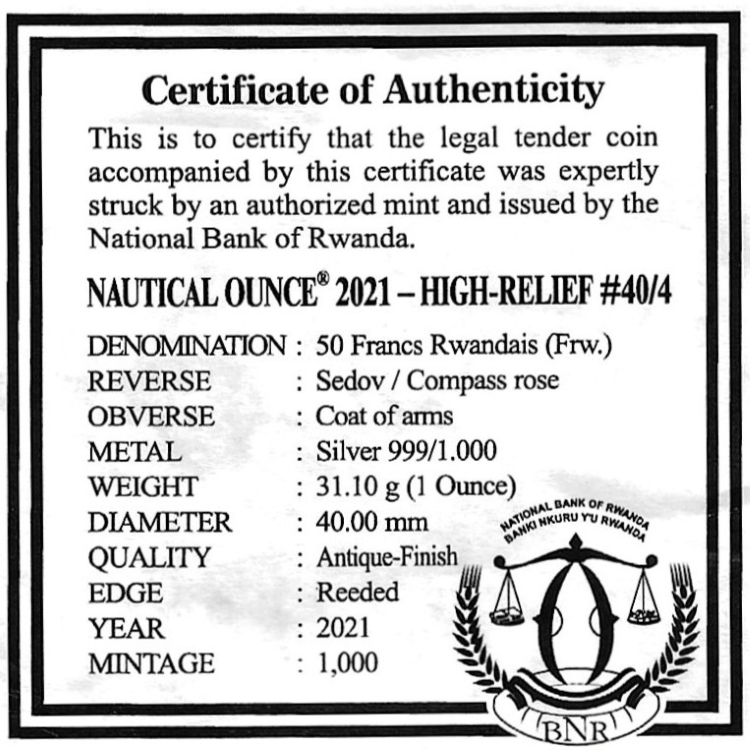
In 2021, the Bavarian State Mint minted this coin for the Republic of Rwanda, imbuing it with a face value of 50 Francs (RWF), thereby establishing its status as legal tender. Each coin, a testament to the mint’s unwavering dedication to quality, is fashioned from 31.103 grams (1oz) of .999 fine silver, ensuring its intrinsic value and enduring beauty. The 40mm diameter of the coin provides ample space for the intricate design to unfold. The high-relief technique, achieved through advanced minting processes, allows for an extraordinary level of detail, capturing the nuances of the ship’s design and the textures of its sails and rigging.
The limited mintage of 1,000 pieces, a hallmark of its exclusivity, transforms this coin into a highly coveted collectible for both dedicated numismatists and passionate maritime history enthusiasts. Each coin is housed in a protective capsule and accompanied by a certificate of authenticity, further enhancing its collectability and value. The obverse of the coin, featuring the official seal of Rwanda, serves as a reminder of its issuing authority, seamlessly blending historical commemoration with numismatic artistry.



Sixth issue from the series: “Nautical Ounce”
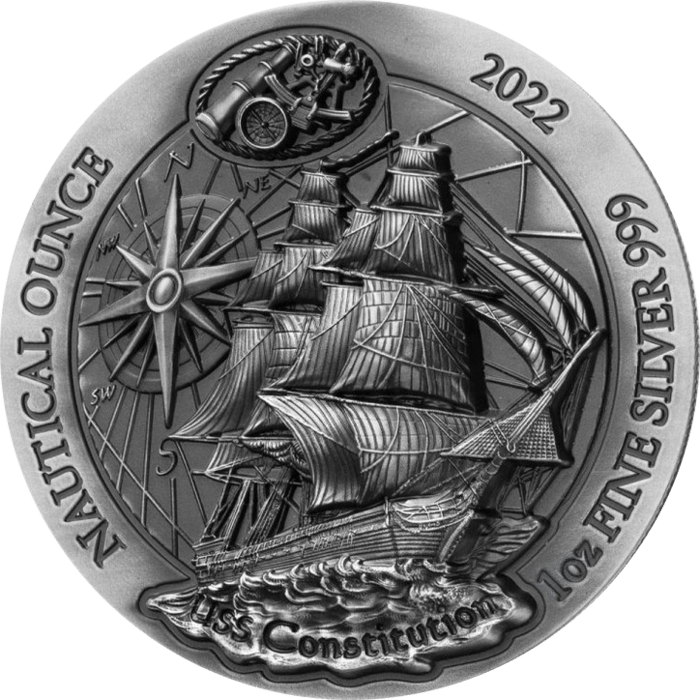
Bavarian State Mint, with its reputation for exceptional craftsmanship, produced the USS Constitution Nautical Ounce Silver Coin, a numismatic tribute to one of the most revered warships in American history. They envisioned this coin as a lasting commemoration of the USS Constitution, affectionately known as “Old Ironsides,” and its enduring legacy as a symbol of naval prowess and national pride. The coin’s design, a harmonious blend of historical accuracy and artistic interpretation, showcases the majestic ship in full sail, its sturdy form rendered with meticulous detail, evoking the era of sail and the ship’s storied past. A stylized compass, subtly integrated into the design, serves as a reminder of the ship’s role in charting new territories and defending maritime interests. The interplay of an antique finish, which imbues the coin with a sense of historical authenticity, and the dramatic high-relief technique, which brings the Constitution’s form to life, transforms it into a captivating piece of numismatic art.
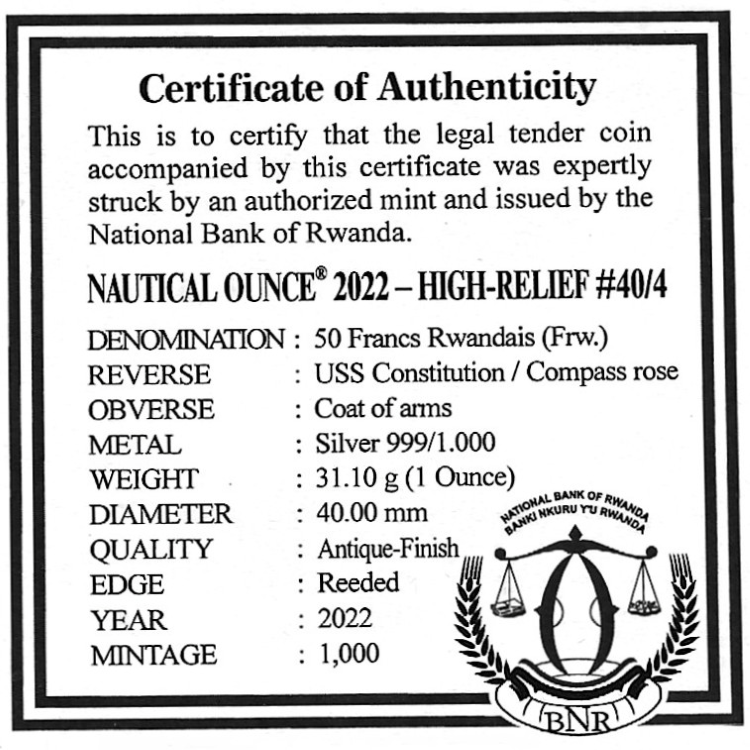
In 2022, the Bavarian State Mint struck this coin for the Republic of Rwanda, imbuing it with a face value of 50 Francs (RWF), thereby establishing its status as a legal tender issue. Each coin, a testament to the mint’s unwavering commitment to quality, is crafted from 31.103 grams (1oz) of .999 fine silver, ensuring its intrinsic value and lasting beauty. With a diameter of 40mm, the coin provides ample space for the intricate design to unfold. The high-relief technique, achieved through advanced minting processes, allows for an extraordinary level of detail, capturing the nuances of the ship’s design and the textures of its sails and rigging. The limited mintage of 1,000 pieces, a hallmark of its exclusivity, transforms this coin into a highly desirable collectible for both dedicated numismatists and passionate maritime history enthusiasts.
Each coin is presented in a protective capsule and accompanied by a certificate of authenticity, further enhancing its collectability and value. The obverse of the coin, featuring the official seal of Rwanda, serves as a reminder of its issuing authority, seamlessly blending historical commemoration with numismatic artistry. The USS Constitution, a symbol of resilience and strength, is beautifully honored through this meticulously crafted coin, ensuring its legacy continues to inspire generations.

Seventh issue from the series: “Nautical Ounce”
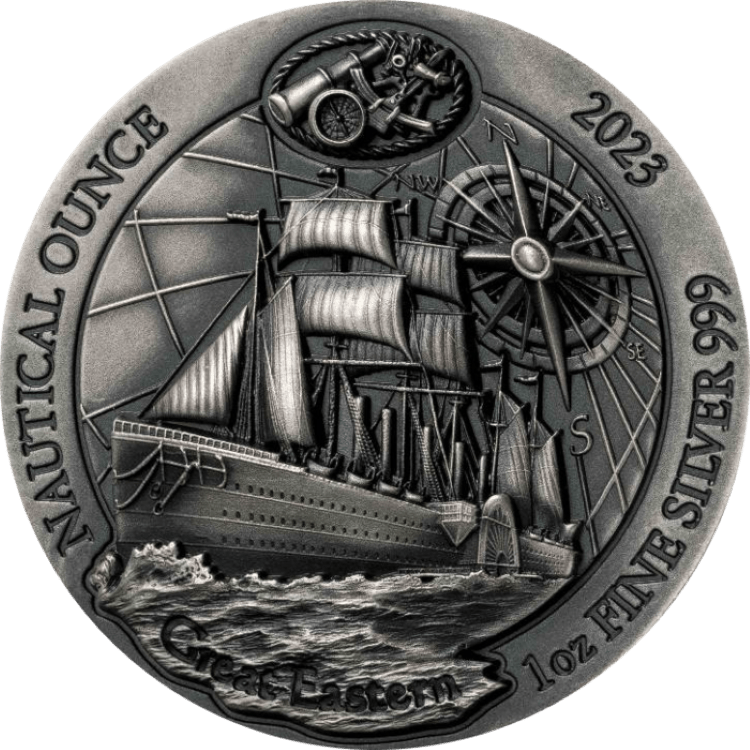
Bavarian State Mint, with its dedication to numismatic excellence, produced the Great Eastern Nautical Ounce Silver Coin, a tribute to the 165th anniversary of a ship that redefined maritime engineering. They envisioned this coin as a lasting homage to the Great Eastern, a vessel that pushed the boundaries of shipbuilding and symbolized the ambition of the Victorian era. The coin’s design, a testament to the ship’s grandeur, showcases the Great Eastern in full sail, its immense size and intricate rigging rendered with remarkable detail. A stylized compass, subtly integrated into the design, serves as a reminder of the ship’s role in pioneering transatlantic communication and trade. The interplay of an antique finish, which evokes the historical period, and the dramatic high-relief technique, which brings the Great Eastern’s form to life, transforms it into a captivating piece of numismatic art.
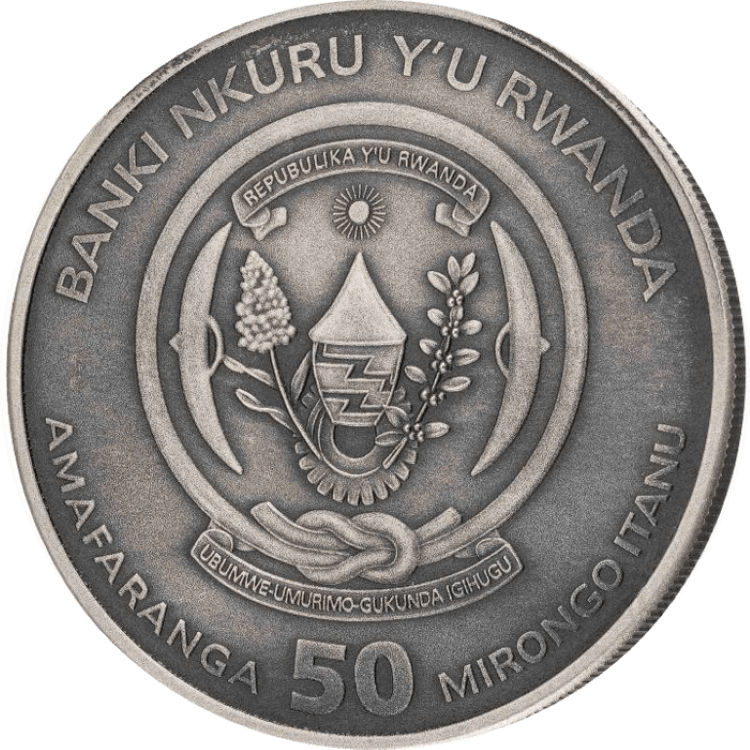
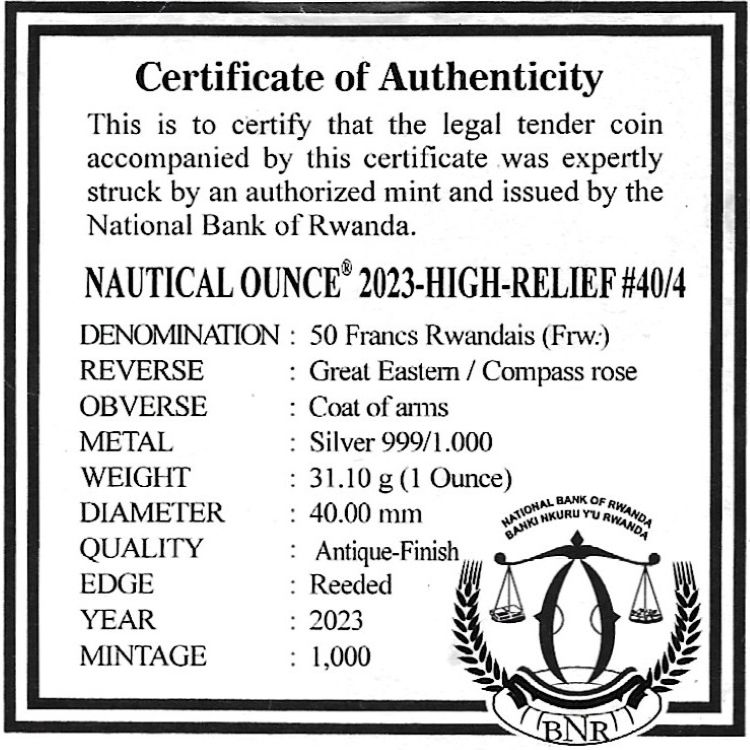
In 2023, the Bavarian State Mint struck this coin for the Republic of Rwanda, imbuing it with a face value of 50 Francs (RWF), thereby establishing its status as a legal tender issue. Each coin, a testament to the mint’s unwavering commitment to quality, is crafted from 31.103 grams (1oz) of .999 fine silver, ensuring its intrinsic value and lasting beauty. With a diameter of 40mm, the coin provides ample space for the intricate design to unfold. The high-relief technique, achieved through advanced minting processes, allows for an extraordinary level of detail, capturing the nuances of the ship’s design and the textures of its hull and rigging. The limited mintage of 1,000 pieces, a hallmark of its exclusivity, transforms this coin into a highly desirable collectible for both dedicated numismatists and passionate maritime history enthusiasts.
Each coin is presented in a protective capsule and accompanied by a certificate of authenticity, further enhancing its collectability and value. The obverse of the coin, featuring the official seal of Rwanda, serves as a reminder of its issuing authority, seamlessly blending historical commemoration with numismatic artistry. The Great Eastern, a symbol of innovation and ambition, is beautifully honored through this meticulously crafted coin, ensuring its legacy continues to inspire generations.

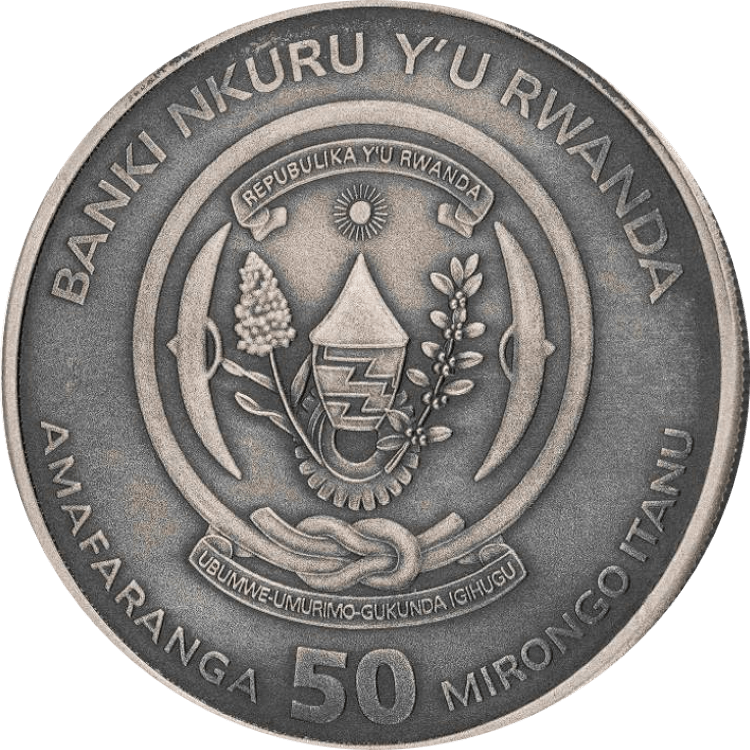
Eighth issue from the series: “Nautical Ounce”
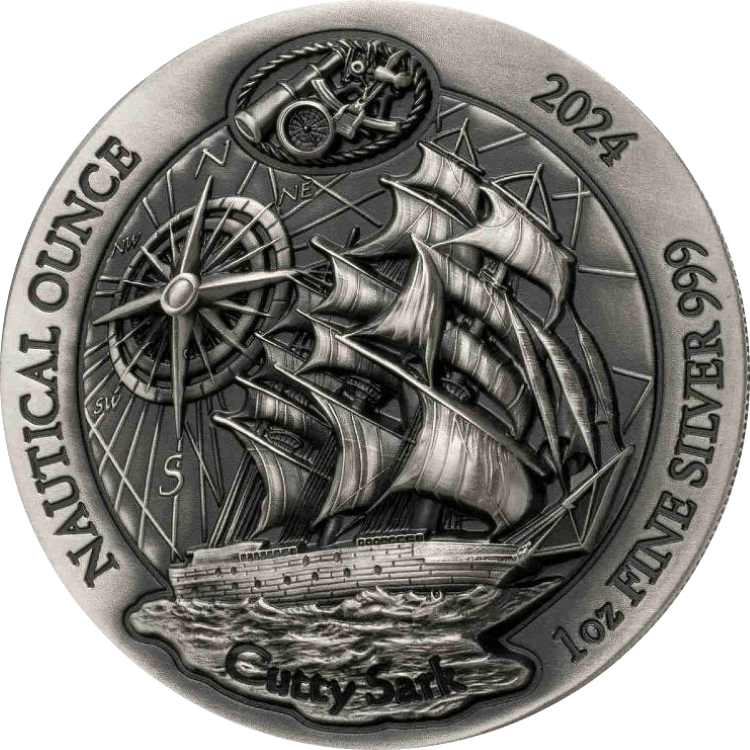
Bavarian State Mint, with its tradition of exceptional minting, released the 155 Years of Cutty Sark Nautical Ounce 50 Francs Rwanda 2024 1oz Fine Silver Antique High Relief Coin, a numismatic tribute to the legendary British clipper ship. They envisioned this coin as a lasting commemoration of the Cutty Sark, a vessel that epitomized the golden age of sail, renowned for its unparalleled speed and record-breaking voyages. The coin’s design, a testament to the ship’s rich history, celebrates the Cutty Sark’s multifaceted legacy, from its days as a swift tea and wool transporter, racing across the globe to deliver precious cargo, to its present-day role as a beloved museum ship in Greenwich, preserving maritime history for generations to come.
In 2024, the Bavarian State Mint meticulously minted this coin for the Republic of Rwanda, imbuing it with a face value of 50 Francs (RWF), thereby establishing its status as legal tender. Each coin, a testament to the mint’s unwavering commitment to quality, is crafted from 31.103 grams (1oz) of .999 fine silver, ensuring its intrinsic value and lasting beauty. With a diameter of 40mm, the coin provides ample space for the intricate design to unfold. The antique high-relief finish, achieved through advanced minting techniques, brings the Cutty Sark’s form to life, capturing the nuances of its design and the textures of its hull and rigging.
The limited mintage of 1,000 pieces, a hallmark of its exclusivity, transforms this coin into a highly desirable collectible for both dedicated numismatists and passionate maritime history enthusiasts. Each coin is presented in a protective capsule and accompanied by a certificate of authenticity, further enhancing its collectibility and value. The coin’s design, paying homage to the Cutty Sark’s enduring legacy, ensures its story continues to be told and appreciated for years to come.

Ninth issue from the series: “Nautical Ounce”
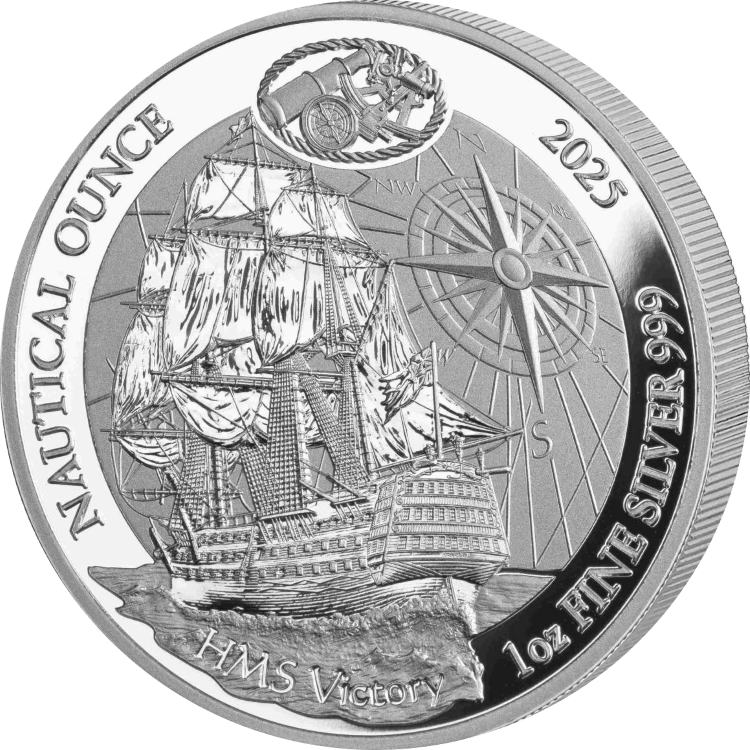
The HMS Victory, a majestic 104-gun first-rate ship of the line, stands as a paramount symbol of British naval prowess and endurance within the Royal Navy. Launched in 1765, this formidable vessel famously served as Admiral Lord Nelson’s flagship during the Battle of Trafalgar in 1805. There, her decisive role secured one of Britain’s most significant naval victories against the combined fleets of France and Spain, fundamentally altering the balance of power on the seas. Beyond this pivotal engagement, she actively participated in numerous other critical encounters, including the First and Second Battles of Ushant, demonstrating her consistent readiness for duty across a tumultuous period of global conflict. Her robust oak hull and intricate rigging exemplified the pinnacle of 18th-century naval engineering, a testament to the era’s shipbuilding mastery and the skilled craftsmanship involved in creating such a powerful vessel.
Today, the HMS Victory remains meticulously preserved in dry dock at Portsmouth Historic Dockyard, serving as a powerful link to Britain’s maritime past. She continues to inspire awe as the world’s oldest commissioned warship, a living testament to an era of grand maritime exploration, expansion, and conflict. Millions of visitors annually are drawn to her historic decks, eager to explore her various levels, envision the lives of the sailors who served aboard, and learn about her storied past. Her continued existence as a museum ship ensures that the legacy of Nelson, Trafalgar, and the broader history of the Royal Navy endures for future generations, offering an immersive educational experience.
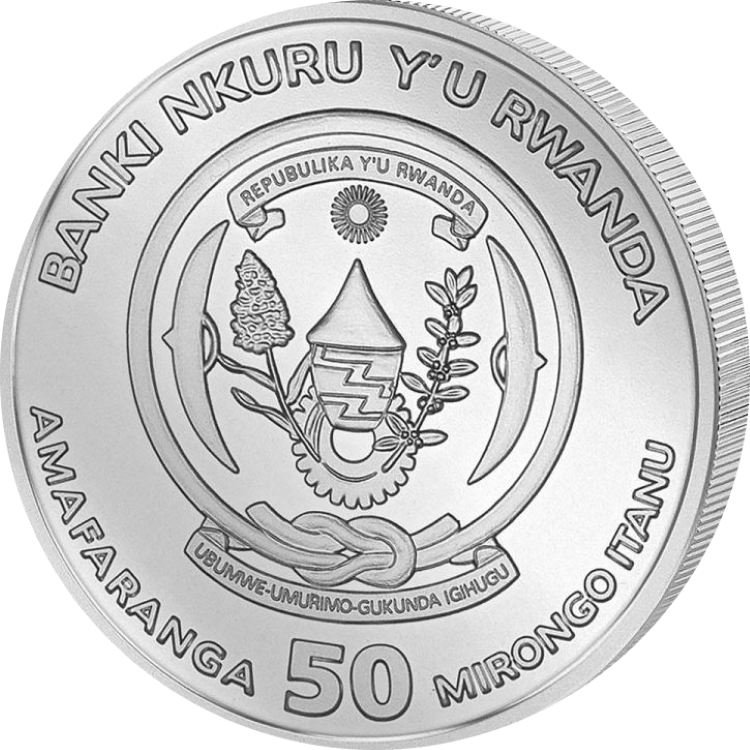
This impressive commemorative piece further amplifies the ship’s enduring legacy. Expertly minted by the esteemed Bavarian State Mint, it showcases a remarkable 99.9% pure silver composition, highlighting its intrinsic value and collectible appeal. Each coin is meticulously struck to a radiant proof finish, a process that achieves a stunning mirror-like field juxtaposed with frosted devices, thereby accentuating the intricate details of the iconic ship. Weighing a substantial 1 troy ounce and precisely measuring 40mm in diameter, the coin’s design prominently features a finely detailed rendition of the HMS Victory under full sail, capturing her grandeur, power, and immense historical significance. Issued by the nation of Rwanda, it carries a symbolic face value of 50 Francs, making this limited-edition coin a highly sought-after and striking tribute to naval history, appealing to both seasoned numismatists and passionate enthusiasts of maritime heritage worldwide.

| NAUTICAL OUNCE SILVER COINS RELEASES | |||||
|---|---|---|---|---|---|
| NAME | YEAR | BRILLIANT UNCIRCULATED | PROOF | HIGH RELIEF + ANTIQUE | |
| 1 oz | 1 oz | 1 oz | 3 oz | ||
| Santa Maria | 2017 |  |
|
 |
|
| HMS Endeavour | 2018 | |
|
|
|
| Victoria | 2019 | |
|
|
|
| Mayflower | 2020 | |
|
|
|
| Sedov | 2021 | |
|
|
|
| USS Constitution | 2022 | |
|
|
|
| Great Eastern | 2023 | |
|
|
|
| Cutty Sark | 2024 | |
|
|
|
| HMS Victory | 2025 | |
|
||








Leave a Reply